Category Archives: Shaolin

HISTORY OF CHI FLOW IN SHAOLIN WAHNAM

(reproduced from http://www.shaolin.org/chikung/chi-flow.html)

18 Jewels

Chi flow at the UK Summer Camp


Question

Sifu, chi flow is a hallmark of our school. Can you tell us who you learned chi flow from? Was it from Uncle Righteousness or Sigung Ho Fatt Nam?

Sifu Mark Appleford, Chief Instructor, Shaolin Wahnam UK


Answer

Yes, you are right. Chi flow is the hallmark of our school. In fact, Tim (Sifu Tim Franklin of UK) mentioned that 500 years from now when people pointed to our school, the most prominent feature they noticed would be chi flow.

Chi flow has enabled us to help many people overcome so-called incurable diseases. For those who train internal force (which is practically everyone in our school), it frees them the concern of deviated training. Hence, we have the luxury of “Don’t Worry” being the first golden rule of our practice.

It speeds up our progress unbelievably. Even for me, when I took one or two years to experience internal force in a particular force-training exercise, our students now can experience internal force in the same exercise in a matter of days! It is just unbelievable but true.

I did not learn chi flow from Sifu Ho Fatt Nam or Uncle Righteousness. Uncle Righteousness did not talk about chi flow. Although there was some gentle chi flow in Sifu Ho Fatt Nam’s school, he did not encourage vigorous chi flow.

Chi flow developed in the long process of my own training and teaching. I heard of and read about chi and its importance in internal force development. There is a kungfu saying as follows: “The essence of internal force is chi”.

My first experience of chi flow was when practicing One-Finger Shooting Zen learnt from Sifu Ho Fatt Nam. But I did not know it was chi flow then, neither did my sifu tell me so. Like any good student in a traditional kungfu context, I just practiced what my sifu asked me to, without understanding its underlying philosophy.

Yet, I was different from other traditional good students. I read a lot of kungfu classics, and had frequent discussion with my sifu on kungfu philosophy. I read about a kind of chi kung developed by the great Chinese physician, Hua Tou, called Five-Animal Play where practitioners moved about in what we would now call self-manifested chi movement.

Years later when I set up Shaolin Wahanm Association and Shaolin Wahnam Chi Kung Clinic in Sungai Petani , I was quite well-known and respected. A kungfu and chi kung master from another city came to me for help, which I rendered him. (Later he betrayed me, and instigated some of my senior students against me.)

I learned that he taught Flying Crane Chi Kung which has self-manifested chi movement as its main approach. I was interested and he invited me to visit his classes. His students performed about 30 different exercises, then went into vigorous chi flow.

He also volunteered to induce self-manifested chi movement in me. He tried to transmit chi to me via my ming meng vital point (located at the back along the waist), but my chi flow was so powerful that he was repelled away.

Later I tried to induce self-manifested chi movement myself. I opened my bai-hui vital point (at the crown of the head) and massage my qi-hai vital point (at the abdominal dan tian), like what this master taught his students. And performed the 30 odd Frying Crane Chi Kung exercises in a chi kung state of mind.

Before I could complete about half of the intended exercises, I was already in a vigorous chi flow. The chi flow was so powerful that I went round and round my living room quite uncontrollably. It was my first time experiencing a very vigorous self-manifested chi movement and I did not know how to stop.

I had an idea. I threw myself on a sofa to stop the vigorous chi movement. I did stop going round and round, but it was a very unpleasant feeling. Now I know that if a practitioner has this problem when stopping suddenly, he just has to go into some gentle chi flow, then think of his dan tian to let his flowing chi settle down. But I did not know this technique then.

I researched the many chi kung classics that I had and learned a lot about self-manifested chi movement. I learned various techniques to induce a vigorous chi flow, like stimulating energy points, performing gentle movements faster and faster, and feeling like drifting peacefully in heaven.

When my students in my various Eighteen Lohan Hands classes (which lasted for 6 months at that time) started to experience some chi movement, I encouraged them to go on. But at that time, I was new to self-manifested chi movement, so I was very careful, following and monitoring each student at a time as he (or she) enjoyed his more than average chi flow, asking him to slow down when the movement became too vigorous. Now I know that self-manifested chi movement is very safe, and I can go for a drink, leaving students to run and jump like monkeys and kangaroos on their own, provided, of course, the practice place is safe.

I explained the philosophy of self-manifested chi movement, which I learned from chi kung classics, to my classes. I explained, for example, that chi from different internal organs manifested in characteristic ways, which are symbolized by the bird which relates to the heart, the deer which relates to the liver, the monkey which relates to the spleen, and the bear which relates to the kidneys.

I noticed that students who recovered from serious illness, like asthma, diabetes, cancer, cardio-vascular disorders and kidney stones, usually had sessions of vigorous self-manifested chi movement prior to their recovery. Looking back with hindsight, this laid the seed of my conclusion now that it is chi flow, not the chi kung exercises themselves, that brings benefits of good health, vitality and longevity.

I reckoned that as self-manifested chi movement was so useful, I could devise appropriate exercises to induce it, instead of letting it develop gradually from Eighteen Lohan Hands. So I composed two sets of chi kung exercises specially to induce self-manifested chi movement.

The first set consisted of Push Mountain Lift Sky, Double Dragons and Fish Flip. This was meant to induce a vigorous forward-backward flow. The second set consisted of Dancing Fairy, Bear Walk and Swinging Hips. This was meant to induce a sideway or a circular flow.

These two sets of self-manifested chi movement exercises were very effective. By then I had reduced the Eighteen Lohan Hands course from six months to three months. These two sets of exercises could enable students to have a vigorous chi flow in a few days instead of a few months. Those of you who learned from me in my early years of world-wide travels, like in Spain, Portugal and Germany, would have learnt these self-manifested chi movement exercises.

Chi flow has helped us tremendously in internal force development. I remember the first time I taught Lifting Water to a student in Australia, Ken, who was a Tai Chi instructor. After lifting our hands about a dozen times, we felt tremendous force in our hands. On hindsight, it was due to chi flow.

Lately I was investigating why our students could develop internal force in a matter of days when masters in the past, including myself, took years. A main reason was that we differentiated between skills and techniques. And the principal skill was our ability to generate chi flow.

I had a historic confirmation when teaching Iron Wire in Barcelona last year (2011). First I taught them the force-method, which is the orthodox method for Iron Wire. Then I taught them the flow-method. I asked the students to compare the two methods and tell me from their direct experience which method was more powerful. I was actually quite surprised when all of them told me the flow-method.

Having found that the flow-method produces better result, when I taught Iron Wire in Killarney in 2011, I mainly used the flow-method though I also introduced the force-method in passing. What was most outstanding about the Ireland Iron Wire Course was mental clarity, besides tremendous internal force. I have no doubt that the flow-method contributed much to the attainment of mental clarity, but I have not found out the philosophical explanation yet.

I had another confirmation recently in Frankfurt (September 2012). After teaching the force-method the first two days to develop internal force in the Triple Stretch, which produced a lot of force, I taught the students the flow-method on the third day. I asked them to compare the two methods and tell me from their direct experience which method produced more force. This time I was not surprised that 10 of them told me the flow-method and 2 said they were not sure.

chi flow

Shaolin Iron Wire


This article is reproduced from a thread in the Shaolin Wahnam Discussion Forum.

THE MEANING AND PURPOSE OF SHAOLIN KUNGFU

(reproduced from http://www.shaolin.org/answers/sp-issues/meaning.html)

Shaolin Kungfu

While combat efficiency is important, Shaolin Kungfu is not just a fighting art but a complete programme of personal development

Question

What does Shaolin Kungfu represent? What is the purpose of learning this style?

— Juan, Mexico

Answer

Shaolin Kungfu is the style of martial art first developed at the Shaolin Monastery in China, and is now practised by many people in various parts of the world irrespective of race, culture and religion.

Many kungfu styles branched out from Shaolin Kungfu, and some examples include Eagle Claw Kungfu, Praying Mantis Kungfu, Hoong Ka Kungfu, Choy-Li-Fatt Kungfu and Wing Choon Kungfu.

In my opinion, shared by many other people, Shaolin Kungfu represents the pinnacle of martial art development. Indeed, as early as the Tang Dynasty in China more than a thousand years ago, the saying “Shaolin Kungfu is the foremost martial art beneath heaven” was already popular.

The main purpose of learning Shaolin Kungfu is to have a complete programme of personal development from the most basic to the most advanced levels. At the physical level, Shaolin Kungfu provides health, fitness, agility and vitality, besides the ability to defend ourselves. At the emotional level, Shaolin Kungfu gives us joy and tranquillity.

Shaolin Kungfu trains us to be mentally focused, and enables us to expand our mind. At its highest level, Shaolin Kungfu leads to spiritual fulfillment, irrespective of religion. Obviously, Shaolin Kungfu is not just a fighting art.

It is also significant to note that an important aspect of the Shaolin teaching is direct experience, which in this case means that a Shaolin disciple does not merely talk about good health and mind expansion, or just read up on spirituality, but actually experience these benefits. If he does not experience, according to his developmental stage, the appropriate results Shaolin Kungfu is purported to give, he should seriously review his training.

direct experienceAn important aspect of Shaolin teaching is direct experience. Shaolin practitioners do not merely talk about spiritual cultivation but actually experience it.

TRAINING IN GRANDMASTER HO FATT NAM’S SCHOOL

(reproduced from http://shaolin.org/general-2/legacy-ho-fatt-nam/ho-fatt-nam06.html)

force training

An important aspect in Grandmaster Ho Fatt Nam’s school is force training


Question

Can Sifu please tell us more about how training in Sigung’s school was? How many students did Sigung teach and how many people trained together in a class?

When I met Sisook, Sigungs’s eldest son, recently in Penang he told us that a minimum requirement for beginners was to sit in the Horse-Riding Stance for a whole hour. Can Sifu please tell us more about the training procedure and the progression of the students during this initial phase? How does the outcome of this approach compare to our comparatively short, but powerful stance training sessions in regards to immediate and long-term effects?

We also learned about a technique that Sisook called “sleeping” which is lying between two chairs. Can Sifu tell us more about this technique?

Sifu Leonard Lackinger

Answer by Grandmaster Wong Kiew Kit

Recalling my days training under my sifu, Sifu Ho Fatt Nam, is both nostalgic and memorable. They were some of the happiest days of my life, and I am eternally grateful to my sifu for his kindness and teaching.

Much of the time at my initial stage of training, I trained alone. There were no other students, and my sifu was often not present. I went to my sifu’s house, which also acted as a temple, every afternoon to train. These were sessions of training, not learning.

Sometimes when my sifu was at home, he would watched me, nodded and then walked away. Sometimes he would say, “Very good, carry on!” Occasionally he would teach me a technique or two, and I would practice and practice it to become skilful.

At my sifu’s house there was a big altar where many statues of Buddhas, Bodhisattvas and Taoist gods were worshipped. Students voluntarily offered a joss stick — just one joss stick — at a main incense burner. Initially, due to my ignorance and arrogance, I never did that. I remember telling myself that I went there to learn kungfu, not religion. But after an intimate conversation with Immortal Li, for whom I am also eternally grateful, I always offered a joss stick before I started training.

Later I requested to train at my sifu’s house at night where some of my seniors also trained. There were not many of them, usually just three or four. My sifu was very selective in accepting students, though I was quite surprised that he accepted me quite readily. I was not only the youngest in kungfu age but also the weakest. My seniors literally handled me in sparring like a small boy, though later due to my dedicated training I could put up some semblance of defence.

It may be of interest to note that before I joined my sifu’s class I could beat all other martial artists in free sparring. But then I chose my sparring partners carefully, and I did a lot of homework before I sparred. With hindsight, this was the seed of my 30-opponent programme.

With foresight, this may inspire our family members in Shaolin Wahnam of the tremendous depth of kungfu. It was not without good reasons, and certainly not due to vanity but with much frustration, when I said that it was not difficult to beat other martial artists in free sparring — if our family members confidently used kungfu, and put in a bit of free sparring practice.

All my four sifus, who were patriarchs in their arts, placed a lot of importance on the Horse-Riding Stance. Some of my seniors came to class just to practice the stance. Indeed, most of the time of training of my seniors was either force training or combat application. There was not much time spent on set practice.

However, I did not have to spend much time on stance training with Sifu Ho Fatt Nam. This was probably because my stances were already good. My sifu asked me to show him the stances. He said they were good, and he moved on to other aspects of kungfu training. In fact he taught me Lifting the Sky before even asking me to show him the stances. After seeing my stances, he taught me One-Finger Shooting Zen. I still remember very well what he told me right at the start.

“One-Finger Shooting Zen is very important in Shaolin training,” he said. “It developed two of the most important of the Shaolin arts, dim mak and tiger-claw. Here we teach the best right at the beginning so that you have sufficient time to practice. Practice it every day. “

Right at the beginning of my kungfu career with Uncle Righteousness, I knew the Horse-Riding Stance was very important. “People in the past practiced only the Horse-riding Stance for at least a year or two,” I was often told, even by people who themselves did not know kungfu. But I did not know in details why was stance training so important. I only knew that the stances formed the foundation of kungfu, but did not know why.

Later I discovered that stance training sunk our chi to our dan tian. All kungfu movements were built upon stances. It developed internal force. Much later I discovered that it also developed mental clarity.

The Horse-Riding Stance in Sifu Ho Fatt Nam’s school was different from that in most other kungfu schools, like the one I learned from Uncle Righteousness. Sifu Ho Fatt Nam’s Horse-Riding Stance was higher and narrower, and was pyramid shaped. Uncle Righteousness’ Horse-Riding Stance was lower and wider, and was box-shaped.

Interestingly, the Horse-Riding Stance I learned from my other two sifus, Sifu Chee Kim Thong and Sifu Choy Hoong Choy, was also high and narrow. But at that time I thought of them as a particular Horse-Riding Stance for Wuzuquan and a particular Horse-Riding Stance for Wing Choon Kungfu, and not as Horse-Riding Stance in general. I associate the Horse-Riding Stance in general with the one I learned from Uncle Righteousness, as most other kungfu schools, especially Hoong Ka, also performed the stance in this way.

Thus, I was initially surprised why Sifu Ho Fatt Nam’s Horse-Riding Stance was quite high. But as a good student, I just followed what my sifu taught me.

cosmic showerAnother important aspect in Grandmaster Ho Fatt Nam’s school is combat application

The higher and narrower Horse-Riding Stance was certainly more comfortable. It was later after I had started teaching that I discovered that the higher and narrow Horse-Riding Stance, which gave it a pyramid-shape, better facilitated cosmic energy to be accumulated at the dan tian, thus building internal force.

Students at Sifu Ho Fatt Nam’s school practiced individually, not in a group, i.e. each student practiced his kungfu on his own, though often they paired for sequence training or free sparring. They also arrived at and left the school at their own convenience, though they might leave at the same time to end the night session.

Students usually started their training with stances and One-Finger Shooting Zen. This was how I usually started my practice too, though my sifu did not spent time formally teaching me the stances. Next they practiced their own kungfu set, or part of it. Often they started with Four Gates, the fundamental set, or part of it. Then they got a partner to practice combat sequences or free sparring, or practiced force training on their own, like rubbing their arms against hard edges of pillars and Iron Palm.

Students seldom practiced a whole kungfu set, but go over again and again some sequences in the set. Hence, sequence sparring came naturally to us. Weapon training was seldom. The weapon most frequently practiced was the Ho Family Flowing Water Staff.

The training procedure I went through was “ku lian”, or “bitter-training”. Ku-lian i.e. enduring long hours of training before one could get a little benefit, is also the approach of most kungfu practitioners in the past as well as today, including those who practice kungfu forms for demonstration or bounce about in free exchange of blows. But my ku-lian certainly gave me more benefits than to most other practitioners.

In contrast, the training procedure of our students in Shaolin Wahnam is a big joke. We tell our students not to train too hard, least they over-train. We tell our students that achieving just 30% of what they achieved while learning in courses taught by me is sufficient to meet their needs. We tell our students to enjoy themselves — and we really mean it.

Yet, despite such enjoyment and less time in training, our students get more benefit than I got when I was a student. And by extension, as I was a very good student with a high level of attainment, our students have more benefits in less time than most other practitioners. Indeed, as some of our instructors have rightly commented, many of our students do not realise how very lucky they are.

Our approach is simply ridiculous in regard to both immediate and long-term effects. Students who practice stance training in my courses experienced internal force discernibly immediately after the training session. In my student’s days in Sifu Ho Fatt Nam’s school I would need about 3 months to experience similar internal force. With Uncle Righteousness who was famous for his fighting, and with Sifu Chee Kim Thong who was famous for his internal force, I did not feel any internal force after training the Horse-Riding Stance for many years!

Students who attended my courses would experience a chi flow on the very first day of their training. It took me more than a year training with Sifu Ho Fatt Nam for me to experience a chi flow, and it was nothing like what our typical students now experience. I did not have any chi flow training with my other sighs.

Internal force is the essence of good kungfu. Chi flow is the essence of any chi kung.

The long-term effects of our students are marvellous. After training in our school for a year, internal force enables our students to attain peak performance, chi flow enables our students to overcome illness, and to have good health, vitality and longevity.

Until I trained with Sifu Ho Fatt Nam, I did not experience any internal force earlier although I underwent stance training delicately. Hence, I cannot say that internal force contributed to my peak performance in my earlier years.

When I was sick in my earlier years, which was actually seldom, I had to take medication. I did not know that chi flow could overcome illness. More importantly I did not know that chi flow could prevent illness.

Once when I was injured by my siheng in free sparring, my sifu, Sifu Ho Fatt Nam, who was an excellent traumatologist, applied medication on me for six months. If I had a chi flow immediately, I could have flushed out the injury in less than half an hour!

More significantly, chi flow gives our students good health, vitality and longevity. I have no doubt that my kungfu training, despite without chi flow in my earlier years, has contributed greatly to my good health, vitality and longevity, but I did not know the philosophy of how it worked as our students know it now. I also did not know in my student’s days how to transfer the benefits of my kungfu training to enrich my daily life, although it must have done so unknowingly, as our students now do.

The technique of lying between two chairs is called “tit pan kiew” in Cantonese or “tie ban jiao” in Mandarin, which means “iron-plank-bridge” in English. It is a very powerful internal force training method. My sifu taught me this method secretly. I don’t know whether he also taught other students.

When I accidentally placed my arm or leg on my wife, she complained that it was very heavy though I did not intentionally apply any force. This gave an idea how powerful “iron-plank-bridge” was.

Actually I almost forgot about this training method, though at the time when I learned from my sifu, I practiced it diligently every night. One reason is that we now have so many effective force training methods which are certainly more comfortable.

Flowing Water Staff

Ho Family Flowing Water Staff


The above discussion is reproduced from the thread Legacy of Ho Fatt Nam — 10 Questions to Grandmaster Wong Kiew Kit

TEN GREATEST ATTAINMENTS IN LIFE

(reproduced from http://shaolin.org/general-2/ten-greatest.html)

good health

The greatest wealth is good health


There is a scroll hanging at my office showing in Chinese ten greatest attainments in life.

  1. The greatest wealth is good health.

  2. The greatest gift is forgiveness.

  3. The greatest crime is not being filial to parents.

  4. The greatest shame is to bully others.

  5. The greatest mistake is to gamble.

  6. The greatest failure is being vain.

  7. The greatest stupidity is to take drugs.

  8. The greatest bankruptcy is loss of hope.

  9. The greatest admiration is to aim for progress.

  10. The greatest happiness is to help others.

Implementing any one of the above teaching per day will surely enrich our daily living.

Grandmaster Wong Kiew Kit
1st November 2013.


the greatest happiness The greatest happiness is to help others

SELECTION OF QUESTIONS AND ANSWERS JANUARY 2016 PART 3 BY GRANDMASTER WONG KIEW KIT

(reproduced from http://shaolin.org/answers/ans16a/jan16-3.html)

Way of the Master

Many stories described in “The Way of the Master” are incredible but true

Question 1

I have read your book. “The Art of Chi Kung”, over 3 times now, and I’ve really enjoyed it. I look forward to reading “The Way of the Master”.

— Qasim, UK

Answer

Thanks for your kind words for “The Art of Chi Kung”. Many people have kindly commented that it is the best chi kung book they have read. It gives a comprehensive, yet in-depth picture of what chi kung is, as well as what practitioners in the pasts attained in practicing chi kung. Hopefully this book may prevent chi kung from degenerating into mere external forms.

“The Way of the Master” is my autobiography, and has been kindly described by the editor as the real story of a small boy becoming a world legend. Interestingly, it is also the most entertaining book I like to read. Readers will not only have much reading pleasure, but also learn many useful lessons that can enrich their daily life.

Question 2

It a bit sad to see that some form of chi kung is lost, like your teacher Sifu Ho Fatt Nam could jump 10 feet from a standing position. I would love to practice that. Can you do that?

Answer

My sifu did not jump 10 feet from the ground, but his sifu, i.e. my sigung did. I cannot do that, though I have other benefits of the Art of Lightness which my sifu taught me, like running up four storeys fast and without panting, and am flexible and agile at an age most people would consider old, i.e. 70, but I still regard as young.

Although I can run up many storeys and long distances, I prefer to take an elevator or drive a car, or better still be driven by a careful driver. As I have often told my students, we should make use of modern facilities.

It is worthwhile to know that chi kung methods were invented not for fun, but to meet expedient needs. Kungfu masters needed to learn the Art of Lightness to jump high as they were often ambushed by many opponents, and this skill enabled them to escape.

I trained the Art of Lightness in my younger days. After many months of daily training I could jump up to about 5 feet. One morning I fell down and cut my thigh, which resulted in stopping my training.

I discontinued my training not because of the cut, as I learned years ago that greatness lies not in never falling but in rising after every fall. I realized it was not a wise use of time, because now we have elevators and cars. Later my wife commented independently that she would love to see the Art of Lightness. Had I known this earlier, I would have continued my training just to make her smile.

But this does not mean that my training was wasted. One I saved my niece, who was about five years old then, from possible serious injury. She was about to roll down a long flight of stairs. I rushed up to save her before she could roll two steps!

Dim Mak

Dim mak is believed by many people to be an lost art, but we are proud that it is found in our school

Question 3

What is the best form of mediation for calming the mind and raising consciousness?

Answer

The best form of meditation for calming the mind and raising consciousness, or the best form of any art for any purpose depends on various factors, like the philosophy and methodology of the teachers as well as the developmental stage and needs of the students.

For you if you have an opportunity to learn in our school, the best form of meditation is entering into a chi kung state of mind, which we do every time we practice. You may find it hard to believe, and many people may be angry at the statement, but it is true that in just a few seconds you will have a calmer mind and a higher level of consciousness than many others who have spend an hour sitting in a lotus position.

Question 4

I am crying as I write this. I myself suffer from Lyme Disease. My dad cannot keep track of his pills. He could not find his way through an airport. He has Parkinsons and dementia. He puts food all over the floor and cannot figure out how to put on his seatbelt. My dad cannot live without my mom.

Mom is utterly exhausted as a caregiver. Her relationship with dad has degraded so badly, that she resists wanting to try to help him at all anymore. Mom has so many demands on her time in caregiving and running an entire household on her own

— Carole, France

Answer

You dad is in a really bad shape.

It is best that he goes to the Holistic Health Centre straightaway, without having to go for my regional course. It is ideal if you and your dad can have treatment at the Centre.

You should be healed in three months, or perhaps two. But your dad may need six months.

You can help him in the first month, but your help should be progressively less each day so that he could be on his own by the second month. This is definitely for his own good. He must learn how to be on his own, and he can do so everyday in one month.

To be well means, for example, he has to eat his own food, not have someone eat his food for him, and do his own toilet, not have someone do it for him. He has first learn how to live, and then how to wholesomely enjoy living his life, all in six months. He can’t have someone feed him and pamper him for life, even if he has money to employ someone to do so.

Your dad must give your mom a chance to live her life, but still loving to him and be his wife. It is very selfish of your dad to want your mom to be his slave, and it is also very bad for his own life.

Your dad, your mom and you can have all these wonderful things, which are actually normal things, if you all really want them and work for them, not merely hope that they will happen.

Chi Flow

Chi flow can overcome any illness and gives practitioners good health, vitality and longevity

Question 5

As my training progresses, my third eye continues to pulsate but less painfully so. I believe the vigorous circulation from Dragon Strength is helping. Prior to Penang, my focus was on the Small Universe and Cosmic Breathing.

— Stephen, USA

Answer

Small Universe will enhance whatever you do, and Dragon Strength will make it more powerful. The way you learned Small Universe and Dragon Strength was also in the right order.

One would still have very good results if he learned Dragon Strength first, then Small Universe. But if he learned Small Universe first, then Dragon Strength, like what you did, the results will even be better.

Question 6

I’ve noticed that my general intuition as well as sensitivity to energy has grown exponentially over the years. For example, whenever I am visiting Buddhist or Hindu temples, I often now feel energy and force emanating from certain statues.

Are these abilities related to the third eye?

Answer

Your third eye is opening, or has opened. In practical terms it does not matter much whether you are at the opening stage or at the opened stage. Only those who intellectualize unnecessarily worry about such issues. As an analogy, it does not matter much whether your business if picking up or has picked out. What is important is that you are earning a lot of profit and your customers have gained a lot of benefit.

The exponential increase of your general intuition and of sensitivity to energy is one of the many benefits that your third eye is opening or has opened. It is very important that you use this and other benefits for good and never for evil.

We do good and avoid evil because we are righteousness. Even if one ignores righteousness and works only for self-interest disregarding the interest of other people, it is also for his own self-interest that he must do good. If he does evil, evilness will certainly return to him. The law of karma is certain.

Dragon Strength

Dragon Strength learnt at the Dragon Strength course will enhance any art you practice!

Question 7

Is there a hidden link between our Dan Tian and our third eye? The more focused my energy is at the Dan Tian, the more my third eye seems to pulsate.

Answer

Yes, there is a direct connection between the dan tian and the third eye, though I don’t know whether there is a direct link, like a meridian or some nerves in modern scientific terms, connecting them.

The more powerful the dan tian is, the more effectively the third eye will function. In other words, if there is a lot of chi at the dan tian, the third eye will open and the person will be able to perceive things across space and time that is not normally possible in ordinary persons.

On the other hand, if a person’s dan tian is weak, his third eye will be close. Not only he has no psychic abilities, his normal eyesight will also be poor.

Question 8

Finally, at what point will I know when my third eye is finally open and the pulsation stop?

Answer

As suggested earlier, in practical terms it does not matter whether your third eye is opening or has already open. But for your curiosity, when pulsation has stopped for some time, and you are used to perceiving across space and time, your third eye has opened.

But this is not absolute. Even when your third eye has open, pulsation may sometimes occurs, just as even when your business has established, it can still pick up.

The most important issue is that, irrespective of whether it is your business or your third eye, you must always use the benefit for good and never for eveil.


If you have any questions, please e-mail them to Grandmaster Wong via his Secretary at secretary@shaolin.org stating your name, country and e-mail address.

NEW YEAR MESSAGE FROM THE GRANDMASTER

(reproduced from http://www.shaolin.org/general-3/message2016.html)

Shaolin Kungfu

Grandmaster Wong presenting a paper at the 2nd World Qigong Congress in 1997 where he was awarded “Qigong Master of the Year”


As we move into 2016, it is worthwhile to look back over the years at what we in Shaolin Wahnam have discovered. Viewing these discoveries from a particular vantage point, some of our family members may not realise their great significance, but viewing the discoveries over many years, with reference to the general development of chi kung and kungfu, these discoveries are really remarkable, and may create history for posterity.

One of the greatest of these discoveries is to enter into a chi kung state of mind, or to enter Zen in Shaolin Kungfu, or to enter Tao in Taijiquan. Shaolin Wahnam students today are very familiar with entering into a chi kung state of mind as we perform it every time we practice, but this concept, as we understand it, is actually new. I did not know about this chi kung state of mind in my students’ days, and most chi kung and kungfu practitioners today are unaware of it.

My first introduction to this chi kung state of mind, though it was not so called at the time, was during a casual talk with my sifu, Sifu Ho Fatt Nam. My siifu told me, “If you are not relaxed and focused, you may as well not practice because you will not get any benefit.”

The first time I read about the term, chi kung state of mind, was from the great chi kung master of China, Sifu Yen Xin. He mentioned that entering into a chi kung state of mind is crucial in chi kung training. He explained that it was a new term, probably coined by him himself, and in the past this mental state was known as “entering silence”. It dawned on me that in other cultures, the same mental state was described as attaining a heightened level of consciousness. I also recalled reading some chi kung literature that the mind, not energy, is the most important factor in chi kung, though it literally means “energy art”.

The skill to enter into a chi kung state of mind was developed by me over many years. When I first taught chi kung to the public, I did not ask students to enter into a chi kung state of mind. But when I found the skill useful, I not only taught it, I transmitted it.

One main reason why I could improve my teaching methodology tremendously, sometimes beyond recognition, is because I teach about a hundred classes a year, whereas most other teachers teach only a class or two. In other words, a typical chi kung teacher teaches his students a particular chi kung exercise one or twice a year, but I teach the same exercise a hundred times. This gives me a lot of opportunities to improve my teaching methods.

Entering into a chi kung state of mind is fantastic. Now students at my Intensive Chi Kung Course can generate a chi flow within the first hour. My early students took about 4 to 5 months to generate a chi flow. Most other practitioners cannot generate a chi flow at will regardless of how long they may have practiced chi kung.

Besides speeding up the attainment of our students, entering into a chi kung state of mind also enables them to accomplish unbelievable high-level results. In a regional course of Massaging Internal Organs of just 4 hours, even relative beginners can direct chi to their internal organs to massage them. In a regional course of Bone Marrow Cleansing, within 4 hours even relative beginners could direct chi to flow at different levels and derive various wonderful benefits. Others outside our school, even when they are sympathetic to us, may find it hard to believe.

How do we know our students could direct chi to their internal organs or to whatever level they wish? In the respective courses, they reported form their own experience that they could do so. In principle, it is like asking someone sitting on a chair how he knows he is sitting on a chair. He knows from direct experience. Only those who have never directed chi to their internal organs or to whatever level they wish, would ask such a question.

In kungfu training, two of the greatest discoveries, and which our students benefit immediately, are to develop internal force and to use kungfu for combat. These two attainments are actually the two pillars of kungfu training. In other words, all kungfu training, if it is done correctly and successfully, is geared towards developing force and combat efficiency.

Again, as developing internal force and applying kungfu for combat are so common in our school that those who are not exposed to other kungfu schools may mistakenly think these kungfu accomplishments are the norms. Although we are not unique in having these abilities, they are certainly very rare. Most kungfu practitioners today, including some masters, do not have internal force, and do not know how to use kungfu for combat.

One of the crucial factor that enables me to discover methods that enable our students to develop internal force and to apply kungfu for combat was differentiating between skills and techniques. This itself was a remarkable discovery. In my students’ days, I did not know the difference between skills and techniques, Most kungfu practitioners today, including masters, do not differentiate between skills and techniques.

The techniques used by all kungfu practitioners to develop internal force and to apply kungfu for combat are genuine. But most practitioners (outside our school) do not have the necessary skills, and they are unaware of it. Those who persist in the techniques for many years and eventually succeed, become masters, and they form a very small proportion of the starting population. The others fail, or give up half-way.

From our perspective, the most important discovery is to transfer our chi kung and kungfu training to enrich our daily life. We do so purposefully and systematically, and I am very happy that we have been very successful.

Previously I thought that the biggest group of people who wrote to thank me would be those whom I helped to cure from so-called incurable diseases. But this was not so. The biggest group of people, by a very big margin, who wrote to thank me were initially healthy. They thanked me for sharing our arts that enabled them to enrich their lives as well as the lives of other people.

Like other discoveries, this discovery was, and is, not common in kungfu circles. Many past masters, despite their high chi kung or kungfu attainment, did not lead happy lives. Some of them, due to their training, were more efficient in their work than had they not trained chi kung or kungfu, but unlike us they did not consciously apply their chi kung or kungfu training to enrich their lives.

Today’s situation is worse. Many chi kung and kungfu masters are sick, physically or emotionally, and some have to take medication on a routine basis. A world known surgeon told me some shocking news — more than 75% of his patients were top martial artists, and their most frequent treatment was hip replacement. These top martial artists practiced their arts as hobbies, which ware meant to give them pleasure!

We in Shaolin Wahnam are indeed very lucky. We have good health, vitality and longevity — though some of you may have to wait 30 years to confirm this benefit. We have mental freshness and mental clarity as well as spiritual joys, irrespective of religion, like being peaceful and happy.

I wish all our Shaolin Wahnam family members and all our guests good health and happiness.

Wong Kiew Kit
1st January 2016.

Grandmaster Wong demonstrating a chin-na technique

OVER-TRAINING AND HOW TO DEAL WITH IT

(reproduced from http://shaolin.org/general-3/over-training.html)

Shaolin Kungfu

Students could generate an energy flow within the first hour of my Intensive Chi Kung Course


Over-training has become a serious issue in our school. It is important to recognise it and to know what to do when it occurs.

Firstly, it is helpful to understand our working definitions of these terms.

Over-training means a practitioner has trained correctly according to how an exercise should be practiced, but the benefit is too powerful for his physical body to bear.

In this sense, overtraining is different from wrong training. Wrong training is when a practitioner has not practiced an exercise according to how it should be practiced. Hence, he has no benefit or he has adverse result.

Strictly speaking, or to split hair, if a practitioner has no benefit, we can cali it incorrect training. The training is not wrong, but incorrect. Therefore he has no benefit. This is the case of most chi kung practitioners.

If a practitioner has adverse result, it is wrong practice. It is not only incorrect, it is wrong. Therefore he has adverse result. This is the case of many kungfu practitioners who sustain internal injury in their sparring.

To split hair further, we can refer to over-training as wrong training. But for our purpose here, we shall differentiate the two. The remedy is different. To overcome over-training, we reduce the training. To overcome wrong training, we correct the training.

Hence, we have four types of training — correct training, incorrect training, wrong training and over-training.

Over-training may result in over-cleansing. The former is the cause, and the latter is the effect. As an analogy, you may earn a lot of money, then you become wealthy. Earning a lot of money is the cause, becoming wealthy is the effect.

Over-training may also result in over-building and over-nourishing, but these are not explained here so as not to confuse you.

How do you know you have over-trained. One good way is that you experience over-cleansing. Before this happened, you might experience strong benefits. Then you feel tired and sleepy. Sometimes you may feel anxious, fearful or angry. This happens when your negative emotions are flushed out of your body faster than you find tolerable. Sometimes you have rashes, pimples or are smelly.

There are a few ways to reduce over-training, which will in turn reduce over-cleansing. Please take note that there may be a time-lapse between the two.

  1. Reduce the time of training.

  2. Reduce the intensity of training.

  3. Expend your energy in wholesome activities.

  4. Stop training for some time.

  5. Perform negative actions.

If you train for half an hour a day, reduce it to 15 minutes. If you train everyday, reduce it to once in two days. But as our training time is short, and we enjoy our training, a more useful method is to reduce the intensity of our training.

An excellent way to reduce the intensity of training is not to enter deeply into a chi kung state of mind. Please take note that even when we do not want to enter deeply into a chi kung state of mind, because of our habitual training, we will still be in a deep chi kung state of mind compared to most other practitioners.

Another way is to focus on your form, or purposely think of your form. This will distract you from your mind level.

Spend time on wholesome activities. Go hiking or swimming. Play football or enjoy music. Roll about on the ground and jump about in the sky. Perform kungfu sets or sequences, focusing on form, not on chi flow, internal force or mind power. If you haven’t got a girlfriend (or boyfriend). get one, and focus on making her happy on a date.

Stop training for a few days, or even longer. Use your training session to spend quality time with your parents. Read some good books, like “The Way of the Master”.

You may even perform negative actions, like tensing your muscles or intellectualising during your training. But perform some gentle energy flow at the end of the training session to clear out negative effects.

It is worthwhile to know that over-training is relative. What is normal correct training to a healthy person, may be over-training to someone who is sick. What is normal correct training to a master may be over-training to a student.

It may also not be easy for some of you to realise how effective we have become in our training. The following facts may help you in the realisation. They are facts, not opinions.

  1. If a practitioner in another school can generate a chi flow after 6 months, it is good result. (I took more than 17 years.) Students who attended my Intensive Chi Kung Course took less than an hour. Roughly this means our students are about 180 times more effective.

  2. If a practitioner in another school can develop internal force after 6 months, it is good result. (I also took more than 17 years, and I was already known as a kungfu genius.) Students who attended my regional courses like 18-Lohan Art and Bone-Marrow Cleansing experienced internal force in a few hours. This means our students were about 180 times effective.

Many people outside our school may concede that we are more effective. They may think we are 2 times or even 3 times more effective. Translated into income, if they earn 2000 dollars or euros a month, they think you earn 4000 or 6000. They will not imagine we are 180 times more effective. If it is just 10 times, you will earn 20,000 when they earn 2000.

To have an idea of how much one should train so as not to over-train, I have suggested that he can get just 30% of what he got at an intensive or regional course with me. That would be enough for his purpose of overcoming illness or contributing to good health, vitality and longevity. In case you think that 30% is too little, let us work out how much benefit it is. If an average person earns 2000 euros a month, as you are 180 times more efficient, you will earn 38,000 euros. If you get 30% of that, you will earn 11,400 euros a month. Translated into chi kung benefits, if an average person practicing chi kung gets 2000 units of benefit a month, you will get 11,400 units, which is a lot of benefit.

Wong Kiew Kit
16th January 2016

internal force

Students at a 18-Lohan Art course performing Double Hooks

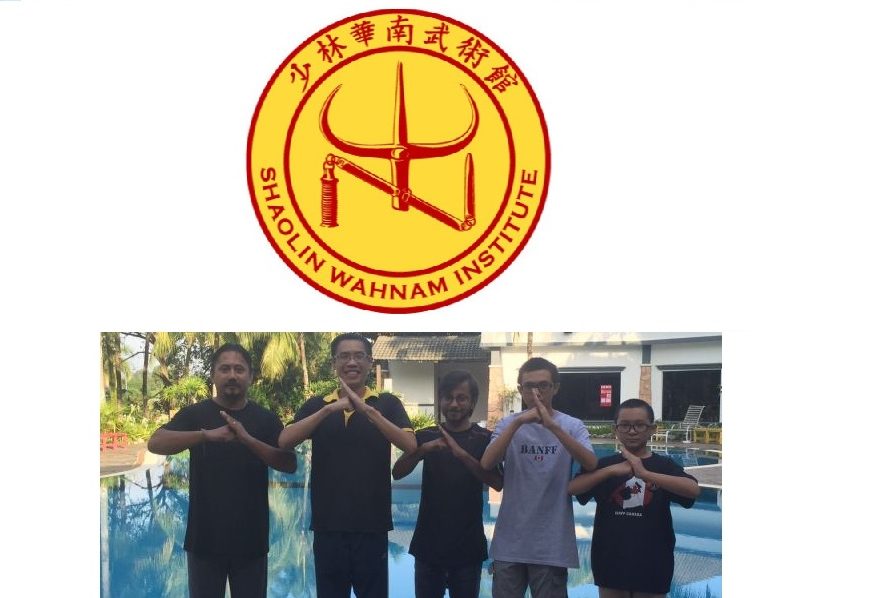
SHAOLIN WAHNAM LOGO AND POETIC COUPLET

(reproduced from http://shaolin.org/video-clips-12/general/logo.html)

The Shaolin Wahnam logo and a poetic couplet were painted on a wall at the Shaolin Wahnam Association in Sungai Petani, Malaysia in the 1980s.

The poetic couplet, reputed from the Venerable Harng Yein, the most senior disciple of the Venerable Chee Seen, read as follows when translated into English:

  • Marvelous Techniques Beget Marvelous Techniques

  • Wondrous Skills Generate Wondrous Skills


Please click on the picture or the caption to view the video

Shaolin Wahnam Logo and Poetic Couplet from Wong Kiew Kit on Vimeo.

This video was recovered from a VHS video cassette by Captain Emanuel Kissey

SELECTION OF QUESTIONS AND ANSWERS DECEMBER 2015 PART 2 BY GRANDMASTER WONG KIEW KIT

Bodhidharma

The great Bodhidharma

Question 1

First I would like to again give my most heartfelt thanks to Sigung for the Legacy of Bodhidharma course in 2012. Since then Iron Wire has become my most prized possession. iI has given me health, a strong body, vitality, a strong mind, and courage on one level.

On another level it has continually brought my kung fu to new levels. As each of the 12 Bridges manifests in my practice I feel as though I take baby steps closer and closer to realizing what past masters experienced, not to mention Sinew Metamorphosis, and Bone Marrow Cleansing. — just wow!

— David, USA

Answer

I am very glad of your progress, which is expected as you have been very diligent in your training.

What you are making are not “baby steps”, as you modestly reported, but “gigantic steps”. We do not mean to be presumptuous, but it is good for you and others of our Shaolin Wahnam Family to know that what you and many of our students can achieve in one year what past masters would take at least 10, but more probably 20!

I myself took more than 20 years of training before I could achieved what you described below, and I was very lucky, I learned from some of the best teachers in the world. Not many past masters had my opportunity.

My mentioning of this fact is not to glamorize our school, but to remind you and others not to over-train. Over-training has become an issue with our diligent students in both chi kung and kungfu. You should avoid their mistake.

Question 2

All the force training I know seems to be almost too powerful now that I’ve been training for some time. I am immensely looking forward to taking all the courses at the UK Summer Camp! Looking forward even more to attending an intensive kung fu course and consolidating all my Sifu has taught me.

Answer

It is important to differentiate my courses, both regional and intensive, from the regular classes taught by your sifu and other Shaolin Wahnam instructors.

My courses, including regional ones, are intensive. My intensive courses in Malaysia are very intensive. Course participants learn in a few days whet they would learn in a year or more in regular classes. Most other students in other schools will never learn what our students will learn, no matter for how long they may train. They may be angry reading this; that is their problem and their business. Frankly, I don’t want to waste my time on them.

What I write here is for our students. It is useful for our students to know the difference between what we practice in our school, and what most other people practice in other schools.

I always justify my statements. What do participants in my courses and students taught by our instructors in regular classes learn in a few days or a year that most other people may not learn even when they have trained for many years? Let us leave aside details like ensuring safety first and rotating the waist, and focus on main points. How many kungfu practitioners today have internal force and are able to apply their kungfu techniques for combat after having trained for 20 years? It is indeed shocking how much kungfu has degraded.

Why don’t our instructors teach in a few days instead of spreading the instructional material over a year? It is for our students’ benefit. Students need time to develop the appropriate skills, which will not only improve their kungfu but also enrich their daily life. The students also need time to adjust themselves to the new levels of energy, otherwise they will over-train with adverse results.

Then, why do I teach a year’s material in a few days? It is also for the students’ benefit. For obvious reasons, it is not feasible for students to learn from me over a year like in a regular class. So I condense the material into a few days so that more deserving students all over the world can benefit.

My courses and the regular classes taught by our instructors complement each other. The focus of my course is to learn. The focus of the regular classes is to practice. Learning constitutes only 5% of practical success; the remaining 95% is practice. Students in our school are indeed lucky to have these two learning opportunities that complement each other.

The Intensive Shaolin Kungfu Course is unbelievable. It covers material ranging from beginners’ to masters’ level. You will learn all that you need to become a genuine master.

Iron Wire

Iron Wire is probably the most powerful kungfu set to generate internal force

Question 3

The main reason I am emailing you is to ask for advice in two matters. Firstly it is somewhat odd but my situation started after practice a few months ago when I was walking around and then relaxing. I started having visions. The earliest one began with me as a very young boy except it wasn’t me as I am now, I was learning a Tiger Kungfu similar to my experience in Post 20 in my training journal.

I recall vague images of some brutal training as well as pleasant chi kung and meditation in a beautiful garden. Then some time later I started getting images of wandering the streets, stumbling around and getting into many fights as well as demonstrating kung fu, and receiving a few coins for food and drink.

These visions got more and more vivid as time went by. The most vivid one to date was a couple of months ago. I think I was walking down a narrow street and got jumped by many men. They were screaming at me, I couldn’t understand them. I think it was Cantonese but I don’t speak the language. They attacked me and I defeated them. But one of them managed to cut me with a knife.

When I came back to my awareness I was sweaty, and my breath was deeper like I just got done fighting for real. I was also bleeding a little bit where I got cut in the vision. This was the last vision I had. I don’t know if another will come.

Answer

It was probable that you relived your past life when you were a skillful kungfu exponent. Just enjoy the visions like you enjoy a movie, but don’t be attached to them.

Experiences in past lives were imprinted into one’s consciousness, but these imprints are not normally accessible to the person in his current life. However, some training, like high-level chi kung and meditation, can erase defilement that blocked these imprints and allow them to surface. Yours appear to be the case.

Question 4

Similarly a couple of months ago I started having very interesting chi flows. I’ve had chi flows that resembled kungfu in the past but nothing like this. I feel so incredible during these flows. It feels like Drunken Eight Immortals but a lot more straight forward and “hung gar-like.” I can feel my spirit and chi expanding and spinning during transitions, contracting and coiling, and exploding straight out again in focused ways with great force.

It is these expansions, contractions, and explosions that seem to cause my body to move in very drunken ways. It is my first time experiencing chi flows at such a deep level like this. Could you give me any advice on how to deal with these emerging memories and “drunken” kung fu flows?

Answer

Enjoy the experience, but do not be attached to them. In other words, when they occur, fine. You can learn a lot and benefit from the experiences. If they don’t occur, fine too. Don’t crave for them.

Many students in our schools have similar experiences, and have enjoyed and benefited from them. There experiences are odd to most other people, especially in Western societies. Some may even think you have gone crazy. But these experiences are not uncommon in our school.

There are two explanations for these interesting experiences. As explained above, chi kung training has erased some defilements allowing some past life memories to surface. The second explanation is that your own training of internal force has enabled you to progress to this high level.

It does not matter which explanation is the actual reason, though I think the first one is more likely. As an analogy, when you go to your bank and key in the right particulars on a teller machine, cash will flow out — provided you have the cash in the bank, just as provide you had the past-life experiences or the necessary high-level internal force training. It does not matter whether it was an officer-in-charge or the bank manager himself who first put the money in the teller machine. In both cases, just enjoy the benefits.

Drunken Eight Immortals

Question 5

The second thing I want to ask you about is the 12 Bridges. They have been manifesting in my practice in interesting ways.

My striking speed was first enhanced incredibly by the manifestation of straight force and inch force. It felt like my punch started off full speed, and then at the last 6 inches or so inch force kicks in and gives a sudden acceleration and an explosion of force like the cracking of a whip. This gave me a sudden flash of intuition that all twelve bridges might be combined simultaneously into an “ultimate strike.”

Since this flash of insight I’ve managed to have 7 bridges manifest spontaneously in my strikes — Lifting, Circulate, Soft, Hard, Straight, Inch, and Press.

Answer

This is an expected result of your diligent training.

All the 12 bridges may be combined into an “ultimate strike” or used separately, depending on the situations. We are the master of the 12 bridges, and we decide how and when to use them. We should not be a slave to rigid theories.

Your manifesting 7 bridges in your strikes is very good. Carry on.

Editorial Note: David’s questions will be continued at March 2015 Part 2 issue of the Question-Answer Series.

Question 6

About 15 years ago some chi kung practitioners opened my chi points. I have been experiencing jing being converted to chi and then to shen. This is a wonderful but powerful feeling, which has made me feel and look younger.

— Ivan, Russia

Answer

Jing being converted to chi and chi being converted to shen are descriptions of two important stages of energy transformation in everyday life or in chi kung training. It may occur naturally at basic levels or through advanced training at masters’ levels.

Jing being converted to chi, or substance being converted to energy, happens to every person in everyday life. It describes, for example, that the food a person eats is converted to vital energy that maintains life.

Chi being converted to shen, or energy being converted to spirit, is also present in everyday, irrespective of whether a person practices chi kung. It describes, for example, that when a person is full of energy, his spirit is u;lifted.

At an advanced level of internal art training, jing being converted to chi may describe some specialized training where a practitioner develops a lot of internal force. Where does the internal force come from? In modern scientific terms, the practitioner breaks down his subatomic particle to release energy.

This modern explanation is from me. The practitioner may not know the scientific operation behind his training. He just trains according to the method taught by his master. Past masters described this process as jing being converted to chi. As I have the benefit of both Eastern and Western education, I am able to explain the Eastern concept using Western terms.

Chi being converted to shen describes another advanced state of training where a practitioner’s energy is converted to spirit. In some of my advanced courses, like Cosmic Breathing and Merging with the Cosmos, many practitioners had this experience. They generated a lot of energy, which greatly strengthened and enriched their spirit to expand beyond their physical body, resulting in a spiritual awakening.

Understandably other people may not believe this happened. But to the practitioners who had direct experience there was no doubt that this happened. More significantly, it was life-changing. If it happened to one or two practitioners in a class of thirty once in a blue moon, critics may say it was their illusion. But if this happened to more than half the practitioners in every class of Cosmic Breathing and Merging with the Cosmos, critics were just stubborn to not accept facts right before their eyes.

Anthony and Grandmaster Wong

When chi if vibrant, the spirit is bright

Question 7

Sometimes I have to slow down or stop everything when this occurs at certain times of the day. My body mass and muscle have consequently reduced significantly much to my disliking. I do not know whether this may be due to ageing, I am 45, but I am only a fraction of the size I used to be. I have also lost weight.

Can I increase my body mass and muscles to my former self? Should I try to oppose the conversion of my jing into chi?

Answer

Your shrinking in size and weight is a serious problem. Either those chi kung practitioners who opened your energy points had done something wrong, or you practiced wrongly.

Irrespective of whether jing being converted to chi, and chi being converted to shen occurred at the basic level of everyday life or at the masters’ level of advanced training, the conversion should not result in a practitioner shrinking in size and weight. It should contribute to his health and vitality.

Of course, you can increase you body mass and muscles to your former self. But you should not do it yourself. You don’t have the knowledge and skills. You should consult a qualified chi kung healer. If you seek treatment at the Holistic Health Cultivation Centre, your recovery is guaranteed.

Question 8

What can I do to improve the results of my chi kung practice?

— Wswaldo, Ecuador

Answer

Contrary to what is practiced in other schools, in our school you don’t have to try to improve your results! In fact we would ask you not to aim at getting the best results when you practice at home. You would have done very well when you practice at home on your own to get only 30% of what you get here in a regional course.

This is indeed very odd, and I need to explain further. In this course not only we practice high-level chi kung, we are very cost-effective. You gain in one day what other students may not gain in one month. The benefit is very powerful. This is alright if it happens once a while, like when you attend a course. But if you get powerful benefit like this every day, it will be over-training.

So, at home when you practice on your own, if your daily result is only a portion of what you get here, like about 30%, that is fine. Your attitude for your daily practice is not that you must get the best of your practice, but to enjoy your practice.


If you have any questions, please e-mail them to Grandmaster Wong via his Secretary at secretary@shaolin.org stating your name, country and e-mail address.

SELECTION OF QUESTIONS AND ANSWERS JANUARY 2016 PART 2 BY GRANDMASTER WONG KIEW KIT

(reproduced from http://shaolin.org/answers/ans16a/jan16-2.html)

One must be properly train to be a chi kung teacher. The above chi kung exercise, for example, is very powerful; untrained teachers may bring harm rather than benefit teaching it.

Question 1

I’ve gained a lot of benefits from the chi kung class. Can I teach my friends to help them?

— Javier, Costa Rica

Answer

No, you should not. You may be able to practice chi kung, but you are unable to teach it effectively. As an analogy, having undergone a surgical operation does not qualify you to be a surgeon.

You may cause harm to them instead of bringing benefits if you try to teach them chi kung techniques as chi kung. It is because you are not trained to teach chi kung.

If you teach chi kung techniques as gentle physical exercise, which you are likely to do, you will give your friends a wrong concept of chi kung. They will think that they practice chi kung when they actually practice gentle physical exercise. They will not get any chi kung benefits, like good health, vitality and longevity. This in fact has happened to more than 80% of chi kung practitioners all over the world.

As many people may not understand the explanation here, it is helpful to elaborate. More than 80% of chi kung practitioners practice chi kung techniques as gentle physical exercise, and not as chi kung which is energy exercise. Hence, they get benefits of gentle physical exercise like loosening joints and muscles, and not chi kung benefits like overcoming pain and illness, and getting good health, vitality and longevity.

Most of these practitioners do not realize this fact. Why are they ignorant of the fact? It is because the forms are the same in gentle physical exercise and chi kung. They use genuine chi kung techniques, but lack the skills to practice them as energy exercise. They only practice the forms as gentle physical exercise.

The same situation happens in Taijiquan. More than 90% of Taiji practitioners practice genuine Taijiquan techniques as external dancelike movements, and not as an internal martial art. They have no internal force, and cannot defend themselves.

The same situation happens in other martial arts. More than 90% of martial artists today practice their art for demonstration or as a generous exchange of blows, but not as an art of sefl-defence. They lack the necessary skills to use their marital art techniques to defend themselves. In free sparring they even take being hit and kicked for granted!.

Question 2

I had just finished performing the Cosmic Consciousness exercise when a horrible feeling came over me suddenly, and then my heart felt like it contracted and became cold, and then my entire body became so cold as if i had been put into a freezer. I tried thinking of my dan tien to reduce the shock.

My joints all started to ache like I was suddenly becoming very ill. I felt so horrible and this haunted feeling was growing, My fear and anxiety started going through the roof and I could not stop it no matter what I tried. Amongst other things, I tried doing a few simple Lifting The Sky exercises without qi flow

Though not asleep, at one point, I saw an image of a woman’s skeleton with only some flesh left on it and no head being dragged across the room on some sort of trapeze-like device — she was flung over it. I was intensely alarmed! This image came out of nowhere, and did not help my state of mind. Eventually my body warmed back up and after some time I fell asleep.

— Elizabeth, USA

Answer

Congratulations. Your experience was a deep cleansing of your bad karma. Some gentle chi flow will help to ease you of the terror and get you back to normal pleasant living. This deep cleansing was due to your practicing too deeply. Expanding into the Cosmos, which you called Cosmic Consciousness exercise, is very advanced and to be practiced by those at an advanced or master’s level.

It is alright if you practice it once a while, like once a month, but certainly you should not practice it too often until you have become advanced. Even for those at an advanced level, they need not practice it often, though they would not have severe cleansing symptoms if they practice often.

For us, i.e. the great majority of people who live in the phenomenal world, the most useful exercises are those taught on the first day of my Intensive Chi Kung Course, which are meant to overcome illness for those who are sick, and to give good health, vitality and longevity when they are already healthy. Even for our advanced practitioners, it is not easy to realize how powerful our advanced exercises are.

Expanding into the Cosmos

“Expanding into the Cosmos” is a very advanced skill, and should be practiced undert the supervision of a master

Question 3

Can I learn to become a best fighter in your school?

— Pranav, India

Answer

You have come to a wrong school to learn to be a best fighter. Although we are combat efficient, and many of our students are international free sparring champions, fighting is low in our priority.

High in our priority in our aspirations for our training is to have good health, vitality, longevity, mental clarity, peak performance and spiritual joys irrespective of religion. Nevertheless, not to make a mockery of ourselves in training a martial art, we pride ourselves to employ our arts in combat.

We also have helped many people overcome pain and illness, including so-called incurable diseases. We take this as a stepping-stone. In other words, overcoming pain and illness is not a fundamental aim for us to practice chi kung and kungfu. A fundamental aim is to have good health. Having good health means we are free from being sick or in pain.

It is legitimate to ask that if we do not take fighting as a top priority in our training, why do we train combat efficiency. It is mainly because our combat training enriches our daily life without us having really to fight.

Practicing chi kung also enriches our daily life, but practicing a martial art makes it more immediate. For example, attaining good health is the climax of many schools of chi kung, but it is only a starting point of a martial art. In other words, chi kung practitioners would consider their practice successfully completed when they have attained good health. But martial artists would consider having good health the start of their training.

As another example, chi kung practitioners generally have more time in making wise decisions. But for martial artists, like when a punch or a kick is coming from an opponent, they have to make fast and wise decisions on the spot.

Question 4

I was lying in bed and suddenly “it/he” was there again, for the third time now. But this time it was much more powerful. In my ear I started to have something that I would call a tinnitus. Although the sound was very brief and not loud, it had this powerful vibes.

I did recognize it immediately again and then I could literally feel how it was lying next to me, right at my back. I felt like paralyzed and got a shock and wanted to scream but was not able to. I did not know what was happening and without thinking I simply started to recite Guan Yin Boddhisvattva’s name over and over again.

I then got calm and fell asleep. This happened to me twice before. But when it happened earlier, I never felt this tinnitus and it/he would be on the other side of the bed, like there would be a distance between us. And I remember it always felt powerful and somehow also “frightening”, but I had never really big fear or a shock and was rather easily able to go back to sleep.

But this time it stays with me. I have no idea what this thing/being is. I can only humbly say that I really think it is for real and not any imagination in my head.

How do I know if I have to protect myself and how could I do it? If I don’t consider the moment when it happens, I don’t really feel like I am in danger but I feel a lot of respect and uncertainty as I do not know what this is.

— Abelle, France

Answer

The being was real. But you don’t have to be afraid. You can attain confidence with the following facts and action:

  1. Your chi flow is powerful — not powerful when compared to your sifu’s but powerful compared to most other people. Other beings would be repelled by your powerful chi; it is like electricity to them. If you are frightened, it is because of your own emotions.

  2. You can chant the Guan Yin mantra, which is very powerful. Not only the mantra will repel the being, it will also sooth you.

  3. You can apply One-Finger Zen onto the being. This is a drastic step and may hurt the being, so don’t use it unless necessary, and usually it is not necessary. Even if you had to use it, warn the being first. If the being did not heed the warning, point your One-Finger Zen at the being with your index finger pointing upward, not pointing at the being. The being would flee away. If it still didn’t, then point your index finger at it and visualize powerful chi shooting from your One-Finger Zen at the being.

I once used the One-Finger Shooting Zen on a monster, which was much more powerful than a ghost or natural spirit and which was disturbing a student. It fled away immediately.

Combat Efficiency

While we train combat efficiency, we place higher priority on other benefits like good health, vitality, longevity and peak performance in our kungfu training

Question 5

I remember when I had the opportunity to take courses for the first time with you, I later saw a ghost (according to my Sifu after hearing my descriptions) here in my apartment.

The ghost was wandering around somehow and was here for quite some time. Only later I asked him to leave and did send him blessings according to the instructions I gladly received as it started to disturb me. But he never ever felt so strong as this being now. This being now feels to be much stronger than me.

Answer

This being was likely to be an asura, or a titan. A titan is much more powerful than a ghost. Asuras are as powerful as dewas, or gods, but they did not become gods because of their negative emotions. The principal emotion of male asuras is anger, whereas that of female asuras, who are very beautiful, is jealousy. On the other hand, the principal emotion of gods is joy.

Ghosts are less powerful and of a lower spiritual level than humans. Many humans are afraid of ghosts because of ignorance and uncertainty. The fear is due to their own emotions. Ghosts actually shun humans but if a ghost was severely wronged, it might risk its own comfort to seek revenge from the responsible humans.

Our attitude towards ghosts should not be fear, but pity. Ghosts are pitiful. They are usually hungry and often lost. If you see one, like when it could not leave you in time, send it blessings and let it leave.

Question 6

I don’t know if it was a coincidence, but I did indeed cancel in a very short notice, on my day of departure, a trip over New Year’s Eve and stayed for almost two weeks unexpectedly at home. I experienced two weeks of very deep rest and peace and beautiful moments with uplifting thoughts. Maybe this is a coincidence.

If not, maybe this being is even visiting me for some good and I should feel gratitude? But why would it then have this powerful, frightening touch?

Sigung, how can I know about the intention of this being?

Answer

There are three ways to find out the intention of the being:

  1. Ask the being itself. You should do so only when you feel confident facing the being. Don’t do so if you feel afraid.Don’t promise the being anything, even if its requests are reasonable and within your means. Say that you may try to help but tell it that you can’t promise anything. If its requests are unreasonable, tell the being firmly but calmly that they are unreasonable. If the requests are beyond your means, tell it that they are beyond your means and it has to find help elsewhere.

  2. You may ask Guan Yin Bodhisattva for the answer and guidance. Go into a chi kung state of mind, pay homage to Guan Yin Bodhisattva, then ask your question and request for guidance. Conclude by thanking the Bodhisattva.

  3. You may ask the Cosmos. Go into a chi kung state of mind. Ask your question and seek for guidance. Conclude by thanking the Cosmos.

Radiating Good Energy

High-level chi kung gives us radiant energy that lower spirits are afraid of

Question 7

Why do we see these beings?

Answer

These beings as well as higher spiritual beings are around us all the time, but most of us cannot see them, nor they see us because our energy and theirs vibrate at different frequencies. It is just like we do not see waves of energy that carry information across the world until these waves manifest on our computers.

Years ago when I was a student under my sifu, Sifu Ho Fatt Nam, he told me an invaluable lesson. He said in Chinese (Cantonese), “Khui tau sam chet yow shen meng”, which means “When you raise your head to look up three feet, there are gods.” He mentioned this when he was explaining a moral value to me that we must be righteous and have a clear conscious all the time.

When we practice chi kung, we open some psychic points that are normally close to most other people. This enables us to see such beings.

Question 8

I would like to take up my Kung Fu training again. I do love my own Chi Kung training but I do indeed also miss my Kung Fu and the possibility to train with other people. Kung Fu has always been a big challenge for me, but I also feel it’s a big opportunity for me and many good things that happened during the last years are due to my training I feel.

Sigung, am I allowed to take a Kung Fu class with a Sisook if he would accept me? I hope that the question is not disrespectful. Taking classes with my Sisook wouldn’t change my gratitude and respect I feel towards my Sifu whom I indeed honor for everything that he has done for me and for the way he spreads the Shaolin Arts.

Answer

It is good that you have decided to resume your kungfu training. The Shaolin Kungfu practiced in our school is so wonderful. Not only it will give you a lot of benefits, it will also enhance your femininity. Indeed, it is a golden opportunity for women to practice our Shaolin Kungfu, though most of them do not realize it, and some are too lazy to do so. Most other kinds of kungfu or any martial art practiced elsewhere make women rough.

It is best if you learn from your sifu. He is an excellent teacher and has the interest of his students at heart. But if this is not feasible, you can learn from your sisook.


If you have any questions, please e-mail them to Grandmaster Wong via his Secretary at secretary@shaolin.org stating your name, country and e-mail address.