Tag Archives: Grandmaster Wong Kiew Kit

SIEW FOONG’S ARRIVAL BROUGHT LOVE AND PEACE, AND FINANCIAL IMPROVEMENT

Grandmaster Wong Kiew KitThe Way of the Master, written by my Sifu, Grandmaster Wong Kiew Kit, is now officially launched.

You can order the book through Amazon or write a review.

You can also read more delightful stories, or order the special edition directly.

Please enjoy one of the memorable stories from my Sifu’s book below:

SIEW FOONG’S ARRIVAL BROUGHT LOVE AND PEACE, AND FINANCIAL IMPROVEMENT

(reproduced from http://shaolin.org/general-2/way-of-master/way23.html)
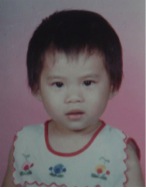
Wong Siew Foong

My youngest daughter, Wong Siew Foong


The year 1987 was very special for me and my wife. That was the year my youngest daughter, Wong Siew Foong (黄小凤) was born. My wife often said Siew Foong was a harbinger of good luck. Since her birth everything was propitious.

One indication of good times to come was the appearance of pigeons in the compound of my house. One morning, after my daily kungfu practice, I was surprised to find many pigeons flocking to my house. The pigeons had been coming, but that particular morning, there were many. They made a lot of noise and were obviously having a good time, though neither my wife nor I, unprepared for their arrival, bought any grains to feed them.

I was surprised not at the pigeons, or their number, or the noise they made, but at why they came to my house. According to Chinese beliefs, pigeons only go to houses of rich people. Although my financial position had improved, I did not consider myself rich, i.e. financially rich, though I was actually very rich in other aspects, like good health, happy family and appreciative students both in the school I taught as a school teacher and in my kungfu and chi kung classes.

Nevertheless, my financial position continued to improve. I did not know, neither was I concerned, whether it was due to my improving financial position that pigeons came to my house, or the other way round, due to pigeons coming to my house that my financial position improved. But I found it poetical to believe that because of Siew Foong’s arrival, both my financial position improved and pigeons, symbols of love and peace, came to my house.

With our improved financial position, both my wife and I could help other less fortunate people, like my wife buying meals for poor children in school, and I giving money to people in need.

Indeed, it was just the other day at the time of writing, that Swee Zhi, the girlfriend of my youngest son, Chun Yian, told us she was so pleasantly surprised when she and Chun Yian caught up with Chun Yian’s friends during the Chinese New Year festive session, that one of Chun Yian’s friends, who is now a lawyer, told her that he knew my wife.

“How did you know auntie?” Swee Zhi asked.

“Not only I know her, I am very grateful to her.”

“Did you meet her before?”

“Yes, every day during my primary school days. She bought meals for us during school recess.”

My youngest daughter, Siew Foong, was very attached to me. Initially, whenever I went overseas to teach chi kung and kungfu, she would be sick. At first, I was not aware of the relationship between her sickness and me going overseas, but my wife, with her motherly instinct, discovered that her sickness was due to her thinking of me when I was not at home.

So, following my wife’s discovery, when I was about to fly overseas, I would console my youngest daughter, telling her that I would soon be home again and asking her not to be sick. It worked very well. Since then, she was not sick when I went overseas.

Whenever I was at home, I would spend a lot of time playing with her and her younger brother, Chun Yian, who arrived two years later. They would run into my arms, and I would swing them overhead, sometimes with them somersaulting in the air, but with me holding them carefully. My wife would be concerned.

“Be very careful not to let them fall,” my wife would call out with some apprehension.

“They are perfectly safe,” I would reply.

My youngest daughter and youngest son, Siew Foong and Chun Yian, were specially close, especially when my other three children were much older than them, and therefore may have different likings. Nevertheless, all the five brothers and sisters were close and loving to one another.

Wong Siew Foong

Myself and Siew Foong at the China Town in Terengganu


You can read more stories at our Discussion Forum. Here are details to order the special and limited edition. This edition will not be reprinted once it is sold out.

CHINESE CHESS STRATEGIES FOR DAILY LIVING

(reproduced from http://shaolin.org/discussion-2/chinese-chess.html)

Wong Chun Yian

Wong Chun Yian teaching Chinese Chess


Santiago

Shaolin Wahnam Ireland

4th October 2011

The ‘Chi’nese Chess

Dear Shaolin Wahnam Family,

I always write after a course and this time will not be different. As always, Wahnam courses are so enriching that exceed my expectations.

It has been a while since I don’t practice Western chess. It has been so because I don’t particularly feel attracted by it. But, with Chinese chess, the situation is very different. It is much more fun and much more realistic.

As in all Wahnam courses, the Chinese chess course (1st and 2nd October 2011 in Ireland) is full of philosophy, advices and strategies to apply on real life too. I made a list with the ones that impressed me most:

Situations can Always be Turned Around

In just one move, one can change from an adverse to a favorable situation. Those in the course had the opportunity to experience this when playing with Chun Yian Siheng. In my case, in one of the games, I was in a favorable position and Chun Yian Siheng gave three advices to my opponent and I lost the game. That taught me a lot. If one knows how, almost any situation can be changed.

Don’t Waste Unnecessary Movements

Like in Zen, it is better to be simple, direct and effective. Again, playing with Chun Yian Siheng, I learned this valuable lesson. I was making a short movement and then, I moved the same chess piece again. Chun Yian Siheng told me: “You did two movements to arrive here. That could be done in only one move. You wasted one movement and you gave that advantage to the adversary.”

Have a Whole Picture of What is Happening

Like in life, one tends to focus only on one perspective or view. It is easy to forget that many other facts can affect the game. One chess piece placed on the back can change everything in only a couple of moves. Again, Chun Yian Siheng demonstrated to me this precious advice within the game. Once, I was so focused on my attack that I forgot about the rest of the chess pieces. In a couple of movements, I lost the game. I didn’t pay too much attention of what Chun Yian Siheng was doing with the other pieces.

Safety First

Many people on the course was attacking without paying attention to defense. What Chun Yian Siheng told us about was: “One cannot think about an attack when defense is weak. First defense, then attack.”

Reduce Your Mistakes

I am very sure that everybody within the course remembers this advice. The more mistakes we were committing, the less opportunities we had for winning the game.

Don’t Lock Yourself

That is another extraordinary advice from Chun Yian Siheng. Within the game, we were locking our chess pieces in order to accomplish one strategy. But, what we forgot, was that we couldn’t use those pieces for the rest of the game because they were locked. Then, most of our resources were wasted and limited. Again, playing with Chun Yian Siheng, he demonstrated to me how important this advice was. He killed 4 pieces of mine with only one piece of him. My other pieces were locked doing something else so I could not do anything about it.

Sometimes You have to Choose to Lose

That is another excellent advice. Chun Yian Siheng was teaching me that lesson as follows: He was placed his chess pieces in the way that always two pieces of mine were in danger. One of them always had to die and I was the one choosing which one of them I was going to sacrifice. Then, I remember in exact words what Chun Yian Siheng told me: “Sometimes, you have to decide what you want to lose in order to get something else.”

It is Better to Lose a Game but Win a Friend than to Win a Game but also Win an Enemy

Chun Yian Siheng finished the course with this excellent advice and quote mentioned by Sifu, Grandmaster Wong Kiew Kit, his father.

As always, it is difficult to return what Shaolin Wahnam is giving me. I feel very blessed with Shaolin Wahnam family within Ireland. Thanks Chun Yian Siheng for coming to teach us this treasured game. It was a wonderful weekend. Thanks also to Joan Sijie for taken care of me and thanks to all Shaolin Wahnam family, here in Ireland, for making me feel like at home.

Shaolin Salute,

Santiago

Chinese chess

Santiago and Wong Chun Yian playing Chinese chess

The above discussion is reproduced from the thread Scholar Project — Chinese Chess in the Shaolin Wahnam Discussion Forum.

SELECTION OF QUESTIONS AND ANSWERS JULY 2015 PART 2 BY GRANDMASTER WONG KIEW KIT

(reproduced from http://shaolin.org/answers/ans15b/jul15-2.html)

Some training in Shaolin Kungfu provides an excellent foundation to learn any other martial art

Question 1

Sifu told me that the best complementary force training for the Drunken Eight Immortals was Wuzuquan, after that Tai Chi Chuan and then One Finger Shooting Zen.

I was reading about Grandmaster Yang Lu Chan and I read he attained high levels by “stealing” Tai Chi Chuan and practising by himself. As I had some experience of Tai Chi Chuan in chi flow, I wanted to emulate Yang Lu Chan and become good at the style and complement my Drunken Eight Immortals with it. I decided to learn Flowing Water Floating Clouds from the videos.

I have been training Tai Chi Chuan now for about a month. The results are (for my level) quite amazing.

— Tim, Belgium

Answer

Yang Lu Chan could attain very high levels in Tai Chi Chuan even when he “stole” it and trained on his own without the personal supervision of a master because he was already well trained in Shaolin Kungfu. And Shaolin Kungfu was the best preparation to learn or “steal” any other arts because all other arts were also found in Shaolin Kungfu. Had Yang Lu Chan been trained in other arts, like Eagle Claw or Fujian White Crane, his attainment could be different.

Not many people know these two facts — that Yang Lu Chan was already well trained in Shaolin Kungfu before he worked as a servant in Chen Zhang Qing’s family, and that Shaolin Kungfu prepared well for him, or any person, to learn any other art. Many people thought that Yang Lu Chan started straight away with Tai Chi Chuan. Many people did not know that all that was found in Tai Chi Chuan was already found in Shaolin Kungfu.

You have the same two advantages Yang Lu Chan had. In fact you have an extra advantage. You can ask your seniors or me whenever you have any problems concerning your Tai Chi Chuan training. Yang Lu Chan had no one to ask. No one knew about him secretly practicing Tai Chi Chuan, and to a very high leve, until he defeated a challenger who came to challenge his master.

So, you should do well in your Tai Chi Chuan.

Question 2

I guide myself through Tai Chi Chuan practise. This time it is not with the usual Chinese dialect, it’s a form of Japanese. It is a strong deep voice, not at all what one would expect from a soft Tai Chi Chuan master, but a deep fierce voice is guiding my forms and speaking through me.

This is either my own sub-consciousness or a master comes teach and merge with myself. Or I am tapping into the cosmos.

Answer

Tai Chi dancers are soft, but genuine Tai Chi Chuan masters are not soft, though they can be gentle.

But what is important is that you must be in control of yourself, not directed by a spirit, even when it is divine and has good intentions. This is very important.

It may not be a spirit but you own sub-consciousness. But for this purpose of regaining conscious control for yourself, you need not worry or intellectualize whether it is a spirit or your sub-consciousness, or something else. So, in the following description, I shall refer to a spirit. You follow the same procedure if it is actually your sub-consciousness or something else.

You should do the following for some time until you regain control. Suppose the spirit asks you to move forward with a powerful strike. Even if this is what you yourself intend to do, don’t do it. Gently thank the spirit but do something else, like moving to your left, without breaking the momentum of your chi flow, and execute a kick instead.

Repeat the procedure for some time until you are fully confident that you have complete conscious control of your own movements and intentions.

in full control

We must always be in full conscious control no matter what we are training in

Question 3

I experienced this a lot of times before as I mentioned in previous emails, but this time I really become one with it. I believe I’m growing up in our arts and at my level now I can let it happen at will, going deep and just going with the flow guiding myself in our arts.

Answer

Becoming one with the Cosmos is growing in our arts. When you become one with the Cosmos, you are becoming yourself at the most supreme level where there is no differentiation at all.

Becoming one with another spirit is not growing in our arts. It is a serious deviation.

I may or may not be right in my presumption that you may become one with another spirit. But either way, i.e. irrespective of whether the force directing you is another spirit or is your own sub-consciousness, following my advice is for your benefit.

If it is a spirit, even a good one, you should not be directed by it and become its slave. You may listen to its advice if it is good, but you have a free choice to accept the advice or reject it.

If it is your sub-consciousness, you also should not be blindly directed by it. You should have your conscious control, based on wisdom and courage.

It is a big mistake if you think that you would lose a great opportunity if you do not follow a powerful spirit. Even without any guidance from any spirit, you can be very powerful by just practicing our arts.

In fact, you already have become powerful. Compare, for example, what you are now with what you were when you first attended a UK Summer Camp. You were such a weakling then that when you were chosen for demonstration, Robin was genuinely concerned that I could pull off your arm.

Why do we train internal force or gain benefits from our practice? It is not for their own sake but to enrich our lives and the lives of other people. We must not forget this, otherwise we may become a slave to our arts instead of becoming masters.

Question 4

I’ve learned the Cloud Hands set in chi flow: I perform palm strike sequences, and snake hands, with cloud hands in between. Sometimes I spread a strong flowing force to my palms or finger tips. I also do fa-jing.

Tai Chi Chuan has a lot of snake influence. Cloud Hands seems to be my own internal flow, merging with energy from around me.

I just want to check up with Sifu if what I’m doing is correct.

Answer

What you are doing is excellent.

Even some world-known Tai Chi masters may not be able to do what you have done. Many of them cannot perform Cloud Hands in chi flow, cannot spread a strong flowing force to their palms or fingers, and cannot merge themselves with the energy around them. All these are indications of high-level Tai Chi Chuan. Indeed, many Tai Chi masters today have no internal force and do not know any Tai Chi Chuan combat application.

These attainments should not make us proud, or belittle others, but they indicate that you have been training very well.

Cloud Hands

Chi flow movement, poetically described as “flowing water floating clouds” or “cloud hands” for short, was the source of Tai Chi Chuan

Question 5

I wish to have strong stances in my chi flow. Sometimes, when it becomes too light, I refuse to let go into chi flow. I think I need to be grounded more, and have a solid foundation in my stance.

Answer

You should aim at yin-yang harmony. Not only you are solid, you are also agile.

When you, your stances or your chi flow have become light, instead of holding yourself up, you should let go and enjoy the agility generated.

Editorial Note: Tim’s questions will be continued at July 2015 Part 3 issue of the Question-Answer Series.

Question 6

I learned the art from two of your direct students, Sifus Chris and Christina Didyk this year. I had purchased your book, “Chi Kung for Health and Vitality”, and found it to be a marvelous resource and well-written piece of literature.

— Aaron, USA

Answer

Chris and Christina are very good teachers. If you learn from them, you are in good hands. If you learn from Chris, you will address me as Sitaigung. If you learn from Christina, you will address me as Sigung.

In our school we carefully follow the tradition of correct address. Although those who are unfamiliar with chi kung culture and the importance of mind set in advance chi kung training may think we are fastidious, this is actually for the benefit of the students. You may experience the truth yourself later on as you progress in your training.

Thank you for your kind words about my book, “Chi Kung for Health and Vitality”. If you find any difference in training methods, follow the instructions given by your teachers, and not the book. Your teacher observe your personally and give instructions according to your progress. My book is written for those who do not have the advantage of learning personally from a competent teacher. Generally you will find the instructions from your teachers are simpler, yet produce better results.

Carrying the Moon

Carrying the Moon

Question 7

Sifu Christina taught me Lifting the Sky and demonstrated Pushing Mountains for me, but she also mentioned that if I have any desire to learn any of the other exercises from your book I should not be afraid to practice them.

I am currently performing Chi Kung to rid myself of general disease but also to remove my Crohn’s disease from my body. It is an illness that affects the colon area via an autoimmune response.

I read that performing Lifting the Sky, Pushing Mountain, and Carrying the Moon in sequence helps stimulate good chi flow to rid the body of illness, but I was wondering if you had any other advice as to what exercise or exercises would be better for targeting that particular area of the body.

Answer

If all other things were equal, performing Lifting the Sky, Pushing Mountain, and Carrying the Moon in this sequence produces the best chi flow to rid the body of any disease in general.

If all other things were equal, if a person has a disease at his colon, Plucking Stars will be the best exercise. Another excellent exercise is Merry-Go-Round.

But in real life other things are not equal. Suppose we have two persons, A and B, suffering from the same disease affecting their colon. A is relaxed and performs Lifting the Sky. B is tensed and performs Plucking Stars. A will have better result than B even when B has chosen a better exercise.

You have advantages many other people do not have. You learn personally from two excellent chi kung teachers. If they ask you to perform exercises other than Plucking Stars and Merry-Go-Round, it is because of some relevant reasons which you may not know.

Question 8

My next question is more of a philosophical/scientific one. I understand that Shaolin Wanham Chi Kung in general provides the body with more energy by drawing it in from the cosmos or other outside sources. So performing chi kung is a way to feel less tired throughout the day if you perform it at the start of the day.

Sleep also does the same thing, and I can see many parallels between sleep and chi kung. Both relax the body to a great degree. Both activate certain areas of the brain that are not normally active. Both energize the body to their own degree, and both are responsible for the growth and healing of the physical body.

Now modern science has not been able to find any conclusive evidence as to why the physical body needs sleep other than we just need to sleep. Is it possible that sleep is a natural (although inferior) form of chi kung that we are inherently born with?

In other words, do our bodies naturally know how to perform chi kung even without us being conscious of the fact or am I way off in my thoughts and reasoning?

Answer

Yours is an example of unnecessary intellectualizing. Your teachers may have told you our three golden rules of practice, which are as follows:

  1. Don’t worry.

  2. Don’t intellectualize.

  3. Enjoy your practice.

Not only your intellectualizing does not bring you any benefit, it actually brings you harm. For example, even if you know the answer, and presume that your answer is correct, it will not overcome your Crohn’s disease. It makes your stressful. It saps your energy. It affects your chi kung training, and may turn your chi kung into gentle physical exercise without your awareness and without your understanding it s meaning.

Nevertheless, I shall still answer your questions, directly asked as well as implied.

Yes, sleep and chi kung are the same. Both relax the body, activate some parts of the brain that are not normally active, energize the body, and are responsible for growth and healing.

Or I can also answer that no, sleep and chi kung are not the same. You need only 10 minutes to relax your body when performing chi kung, but you may toss about in bed for hours before you can sleep. Chi kung can heal you of any disease, but sleep doesn’t.

Yes, modern science has not found any conclusive evidence why a person needs sleep. I can also answer that no, modern science has found conclusive evidence why a person needs sleep. He needs sleep to remain sain. If he goes without sleep for days he may go crazy.

Yes, sleep is a natural, though inferior, form of chi kung. I can also answer no, sleep is not a natural form of chi kung, even inferior. Chi kung gives you mental clarity, but sleep may make you dull.

Yes, our body naturally knows how to perform chi kung, with or without our awareness. Our chi flow is natural. Naturally we repair wear and tear in our body. These are important tasks chi kung does. You are spot on in your thoughts and reasoning.

I can also answer that no, our body does not know how to perform chi kung naturally. That is why genuine chi kung teachers are very rare and valuable. More than 80% of people who say that they practice chi kung, actually perform gentle physical exercise, and most of them do not even know it. If our body can naturally perform chi kung, this ridiculous situation would not have happened. So your thoughts and reasoning are way off.

Hopefully by now you would have realized that your intellectualization is futile.

DAY 3 OF INTRODUCTORY CHI KUNG COURSE BY HOLISTIC HEALTH CULTIVATION CENTRE

(reproduced from http://shaolin.org/video-clips-10/holistic-health-cultivation-centre/overview.html)

Holistic Health Cultivation Centre

Holistic Health Cultivation Centre


The Holistic Health Cultivation Centre, Kuala Lumpur, Malaysia, which has an outstanding record of helping people overcome so-called incurable diseases conducted an Introductory Chi Kung Course from 11th June to 15th June 2015. The course was taught by Sifu Dr Foong Tuck Meng and Sifu Wong Chun Nga.

During a special training session taught by Grandmaster Wong Kiew Kit, the Grandmaster mentioned two important points:

  1. As a matter of course, students who daily and correctly practice the exercises taught at the course will overcome their illness if they are sick, or will prevent illness happening if they are already healthy.

  2. Students should choose the right techniques and practice at the right level to attain their aim of overcoming illness or maintaining good health.

Grandmaster Wong explained the difference between “as a matter of course” and “as a matter of fact”. If a person drove on an expressway from Kuala Lumpur to Singapore, arriving at Singapore was a matter of course. But as a matter of fact, he might not arrive, if, for example, he stopped half way or turned off to other roads.

Grandmaster Wong also pointed out that medical chi kung, which was meant to overcome or prevent illness, was the lowest in the following hierarchy of chi kung

  1. Medical Chi Kung

  2. Chi Kung for Health and Vitality

  3. Chi Kung for Scholars

  4. Chi Kung for Warriors

  5. Spiritual Chi Kung

If a practitioner practiced at a higher level, i.e. if his chi kung was too powerful, he might harm himself. It was like, Grandmaster Wong explained, asking an untrained person to run a marathon or lift heavy weights.

Hence, practitioners who wished to overcome or prevent illness must not practice at a high level even when they had the knowledge and ability to do so. It was the same in daily life. One must chose the best method and operate it at an appropriate way that fulfilled his needs.

This is Day 3 of an Introductory Chi Kung Course from 11th to 15th June 2015 conducted by Holistic Health Cultivation Centre which has an outstanding record of helping people overcome their so-call incurable diseases.

CHUN NGA COULD BREAK A BRICK AT THE AGE OF ELEVEN

Grandmaster Wong Kiew KitThe Way of the Master, written by my Sifu, Grandmaster Wong Kiew Kit, is now officially launched.

You can order the book through Amazon or write a review.

You can also read more delightful stories, or order the special edition directly.

Please enjoy one of the memorable stories from my Sifu’s book below:

CHUN NGA COULD BREAK A BRICK AT THE AGE OF ELEVEN

(reproduced from http://shaolin.org/general-2/way-of-master/way21.html)

my mother and three children

My mother with Chun Nga, Wei Foong and Sau Foong


While I was teaching as a school teacher in Alor Setar, my wife and second daughter stayed with me. My eldest daughter stayed with my parents in Penang, which was only about 125 kilometres away and which I considered my hometown, where we returned every weekend. As a teacher’s salary was poor, I could afford to buy a used car only after working for about ten years, which both my daughters obviously enjoyed travelling in, often counting other vehicles as they passed us by. Before this, we travelled by public buses.

More important than a car was the arrival of my son, Wong Chun Nga (黄俊雅), who was born in 1979. The name “Chun Nga”, also suggested by my wife, means “Handsome and Elegant”, which describes him very well.

Chun Nga was eager to come out to see the world. My wife bore him for only seven months, instead of the usual nine months. So he was very tiny when he was born. According to Chinese belief, a seven-month child, poetically described as a seven-star child, is supposed to be very intelligent.

Despite being tiny when he was a baby, Chun Nga had a lot of internal force. He learned it the hard way, not directly from me but from my senior students even before our present worldwide Shaolin Wahnam Institute was established. After I had resigned from Shaolin Wahnam Association which I had founded earlier, the story of which will be described later, some senior students came to my house to continue their Shaolin training.

My wife told me that Chun Nga would wait at the gate of our house, and when Goh Kok Hin, who owned a small sundry shop which has now grown into a mini supermarket in Kota Kuala Muda, a small town about 25 kilometres from Sungai Petani, arrived he would give a packet of sweets to Chun Nga.

Chun Nga did not just enjoy eating the sweets; he observed our training. Later, he was helped by Cheng Cheong Shou, another senior student, who was a chi kung instructor helping me to spread the benefits of chi kung to the public. At the age of eleven, Chun Nga could break a brick. It was a remarkable demonstration of internal force as a child of eleven could not have the physical strength to break one.

Chun Nga’s internal force opened some psychic centres in his head. He could see through a person’s body. I was quite surprised when one evening he told me he saw two bones inside the forearm of a chi kung student who came to me for some consultation. I did not expect an eleven-year-old child to know of the radius and the ulna of the forearm. Most children would think there was only one forearm bone.

On another occasion when Wong Yin Tat, another senior student who had Iron Shirt, consulted me for some internal injury sustained when he tensed as I struck him on one shoulder to let chi pass to the other shoulder, Chun Nga could see a black mass of blocked chi in his chest. When I channelled chi to heal Yin Tat, Chun Nga could see golden chi transmitted from my sword-fingers disperse the black mass of blocked chi.

I had an experience of Chun Nga’s internal force much later. During an Intensive Shaolin Kungfu Course in Sungai Petani, I demonstrated a felling technique to the course participants on Chun Nga, but was surprised that he was stable and solid. I could fell any able-bodied adult quite effortlessly, but in this case, though eventually I fell Chun Nga, I had to use some special techniques.

Many of our senior instructors in Shaolin Wahnam Institute today were first trained by Chun Nga. When they attended my Intensive Shaolin Kungfu Course, I asked Chun Nga to familiarise them with basic Shaolin stances. I did not know Chun Nga was hard on them until a few told me, not complaining but commenting that the course was indeed tough, that Chun Nga had them in their Horse-Riding Stance for an hour! No wonder they have very good internal force now.

Wong Chun Nga

Chun Nga breaking a brick when he was only eleven


You can read more stories at our Discussion Forum. Here are details to order the special and limited edition. This edition will not be reprinted once it is sold out.

SPARRING AND KUNGFU CULTURE

(reproduced from http://shaolin.org/answers/sp-issues/sparring-culture.html)

Grand Free Sparring Competition

An invaluable old picture taken about 30 years ago showing Poh Luk and Ah Kai (both are Sifu Wong’s senior classmates) engaged in an annual grand free sparring competition in Sifu Ho Fatt Nam’s Shaolin school.
Notice that the combatants did not wear any protective gears and they used typical Shaolin Kungfu. There were no rules and no referees. The combatants just fought, but usually there were no injuries because the combatants could defend themselves well, and on infrequent occasions when they couldn’t, the opponents would control their strikes expertly. Such an annual grand free sparring competition amongst classmates followed the old tradition of the southern Shaolin Monastery in China.

Question

Finally we spar using gloves for about 30 minutes.

— Suis, Country Withheld

Answers by Grandmaster Wong Kiew Kit

Not a single kungfu master in the past used gloves for sparring. Indeed I believe that any instructor asking his students to use gloves, himself has had no experience of genuine kungfu sparring. Using gloves to spar, especially without methodical preparation, almost always results in the students resorting to boxing or kick-boxing techniques.

Question

I just hate sparring. I feel like a living punch bag. When I spar with senior students I am helpless; I can hardly touch them.

Answer

Your case, which is also the case of the majority of kungfu students today, is unfortunate. Sparring is an essential, and actually a lively and enjoyable, part of kungfu training. It is often in sparring, pre-arranged or free, that the beauty and efficiency of kungfu is brought to life.

Something is basically wrong if anyone becomes a living punch bag in sparring, in which case it ceases to be sparring, it has become a free exchange of kicks and blows. In traditional kungfu sparring, including free sparring, no one should be hurt. In the past, even free sparring was carried out with weapons; hurting one another was out of the question.

Question

Our teacher tells us to try to use the techniques that we have learned and to attack. But till now it is merely exchanging blows and doing chain punches. I try to be relaxed and to use the techniques and to stay in my stance but everything just goes too fast.

Answer

The teacher did not have proper training in kungfu sparring when he was a student, otherwise he would not merely ask his students to try to use their techniques, he would instead actually and systematically teach them how to use the techniques.

Let us take an analogy. Suppose you are a properly trained swimming instructor. You would first teach your students the appropriate swimming techniques. Next you would have them practise the techniques systematically, first with full control, then as they progress you would gradually release the control. Only when they are competent you would allow them to swim, but still under close supervision and relevant correction whenever they make mistakes. You do not simply throw your students into water and ask them to try to swim.

Question

Sometimes I try to defend only but I can’t deflect anything,. I’m too slow. I have been sparring since the first lesson.

Answer

This is because you have not been properly trained. Asking a kungfu student to free spar in his first lesson is like throwing a beginner into deep water in his first swimming lesson and asking him to try to swim.

There are many types of sparring, and I reckon that here you are referring to free sparring. In traditional kungfu training, free sparring comes at the end of combat training, and not at the start. Free sparring is not meant to teach fighting, as many modern instructors mistakenly think; it is meant to test and confirm that the students can fight. And they can fight effectively only if they have been systematically trained to do so.

Wrong application of sword

Sparring is found in all styles of kungfu, including Taijiquan of course. Goh from Singapore practiced sparring with Geoffrey from England at an Intensive Taijiquan Course in Malaysia in September 2004.

Question

Most other students seem to enjoy the sparring. I have talked to senior students about it. They say it is normal to get a lot of hits in the beginning, sparring is to develop stamina, sparring is a way to see if the techniques work. You must learn to accept hits and learn how to really hit instead of merely touching a person.

Answer

It is not normal to be hit, not even once. That is the fundamental purpose of combat training. Should this happen in the past, especially when sparring with weapons, the students would have been killed many times over. If in your sparring practice you are hit, it is accidental, not normal, and it indicates that you have failed in your purpose.

Sparring may develop stamina, but that is not its main purpose. There are other and better methods to develop stamina.

Sparring is not a way to see if the techniques work. In the first place, there is no questions about whether the techniques work. If there is any doubt, that technique should be discarded. Only techniques that have proven to work well are selected and practised, and in any particular combat situation the best one amongst the many available proven techniques is applied. In combat there is no room for chance; the combatant has to be 100% sure.

If in real combat or free sparring, a combatant is hit, it is not because his chosen technique cannot work, but because he lacks the appropriate skills to use the technique effectively. The fact that he chose the technique means not only it can work but it is the best for that particular situation. If he does not know which technique to use, then he should not be sparring in the first place. He is simply not prepared; he should go back to earlier stages of pre-arranged sparring.

Accepting hits and really hitting others may be normal in a brawl, but certainly not normal in traditional kungfu sparring. A kungfu exponent is expected to effectively defend against all hits, and if during sparring practice his partner could not defend against his attacks, he should merely touch his partner and not actually hitting.

Even in a real fight, he should avoid hurting an opponent unnecessarily. This is known in kungfu culture as “dim tou wai chi” (in Cantonese). It means in sparring or a real fight, you merely touch your partner or opponent, not really hurting him.

In the past when a master touched another master in a match, the latter would withdraw and gracefully acknowledge defeat. Sometimes he might kneel down and prostrate, and thanked the victorious master for sparring his life — in Cantonese it would sound something like: thor cheah si fu sau ha lau cheng, which means “Thank you, master, for showing mercy under your hands.” This is traditional kungfu culture. Continuing to brutally strike a helpless opponent, and proudly demonstrating to a maddening crowd how merciless he is, is a culture of barbarians.

There was no need for a master to strike hard to demonstrate his force. It was common knowledge that every master would have trained to be so powerful that he could kill or maim with just one strike. Kungfu in the past mainly involved force training, not learning flowery movements for demonstration as is the norm today.

That one touch was not connected randomly, it always aimed at a vital spot. If a forceful strike on a vital spot could not put an opponent out of action, it would at least daze him momentarily, which would be sufficient for the master to follow up instantly and from close quarters a second and a third strike on the same vital spot.

Question

I know my sparring skills will improve if I continue doing it

Answer

The way you have been practising your haphazard sparring not only will not improve your kungfu skills, but it is actually detrimental to your development. You are actually conditioning yourself to take unnecessary punishment which may lead to serious injury, and learning to be insensitive, brutal and aggressive which is bad for your psyche.

Right aplication of sword

Besides unarmed sparring, there is also sparring with weapons. Indeed sparring with weapons was more important in the past than unarmed sparring. Here Sifu Wong demonstrates an application of the Shaolin sword against a sweeping staff attack from his senior disciple, Goh Kok Hin, during a sparring practice.

Question

My teacher says our sparring is very light compared to other martial arts like kickboxing. This way of training feels like the hard way to learn self-defence. I have read your book “The Art of Shaolin Kung Fu” and I think the Shaolin training methods that you describe are a lot more advanced.

Answer

Your teacher has confused brawling with sparring. Kungfu sparring is elegant and safe, but can be very destructive if needed be — more destructive than other martial arts, including kickboxing. Though it is far from pleasant, an able-bodied adult may stand a few kicks from a kickboxer, but he would not last one strike to his eyes or groin from a kungfu exponent.

There is no self-defence in the way of training you have described. It is merely a matter of enduring your partner’s strikes while striking hard at your partner at the same time. I do not consider it the “hard” way, in the sense that though the training is tough it brings benefits eventually. I consider it silly; I really cannot think of any reasons why one should subject himself to such punishment, and with no benefits in sight. If he wants to let off stream, he might do kendo; if he wants to be a fierce fighter, he might do Muai Thai Boxing.

Question

When I go home after training I feel frustrated. I can’t stop thinking what I’ve done wrong and how to improve my fighting.

Answer

You haven’t done anything wrong in your training; it is the training that is wrong. Hence, you got the results the training gave because you carried out your training correctly. Obviously what you need is to change to another type of training which enables you to be combat efficient without having to suffer injuries, and to be calm and fresh instead of being tensed and tired. All genuine kungfu training gives such results — in practical terms, not just in writing.

Question

When I feel frustrated I read your webpages or books. They give me inspiration to continue my practise. But after the last training my head ached and it seemed like a sign to quit.

Answer

I am glad you have derived inspiration from my books and webpages. I wish to stress that what I have written in my books and webpages are true, and is written from direct experience. Someone practising the ways I have described will get the results as promised. You can verify this by reading the comments my students have written , and although other people may regard such experiences as exceptional, they are actually typical of what my students have. In other words, almost everyone who learned from me have had similar experiences.

But you have to learn directly from me. It is difficult to have similar experiences by learning from my books, otherwise you too would have those wonderful results. It is not that I have kept some secrets from my books. In fact one would get much more information from my books than from learning personally from me. The reason is that those wonderful results are obtained from developing skills, and not just from gathering knowledge, and while knowledge can be gathered from books, skills need to be acquired from a master.

Question

For the past few months I am thinking of quitting Wing Chun. I know I will get better when I continue training but I don’t know if it’s worth it any more. Quitting feels like a personal defeat and I think the best of Wing Chun has yet to come. Is it too early to quit? Sifu, could you please give me some advice.

Answer

Often it is not what you learn, but how you learn it that is more important. If you learn Wing Chun the way it was taught by traditional masters, you would have good results. But the ways you described in your training are not the ways the traditional masters taught it. If you continue hurting yourself in your training, physically as well as psychically, the worst, not the best, has yet to come.

In such a situation, quitting is certainly not a personally defeat. On the contrary, it represents a realization that you have been on a wrong path, and now you want to change for a right one. It needs courage and determination to change.

LINKS

Reproduced from Question 2 in Selection of Questions and Answers — April 2000 Part 3

DAY 2 OF INTRODUCTORY CHI KUNG COURSE BY HOLISTIC HEALTH CULTIVATION CENTRE

(reproduced from http://shaolin.org/video-clips-10/holistic-health-cultivation-centre/overview.html)

Holistic Health Cultivation Centre

Holistic Health Cultivation Centre


The Holistic Health Cultivation Centre, Kuala Lumpur, Malaysia, which has an outstanding record of helping people overcome so-called incurable diseases conducted an Introductory Chi Kung Course from 11th June to 15th June 2015. The course was taught by Sifu Dr Foong Tuck Meng and Sifu Wong Chun Nga.

During a special training session taught by Grandmaster Wong Kiew Kit, the Grandmaster mentioned two important points:

  1. As a matter of course, students who daily and correctly practice the exercises taught at the course will overcome their illness if they are sick, or will prevent illness happening if they are already healthy.

  2. Students should choose the right techniques and practice at the right level to attain their aim of overcoming illness or maintaining good health.

Grandmaster Wong explained the difference between “as a matter of course” and “as a matter of fact”. If a person drove on an expressway from Kuala Lumpur to Singapore, arriving at Singapore was a matter of course. But as a matter of fact, he might not arrive, if, for example, he stopped half way or turned off to other roads.

Grandmaster Wong also pointed out that medical chi kung, which was meant to overcome or prevent illness, was the lowest in the following hierarchy of chi kung

  1. Medical Chi Kung

  2. Chi Kung for Health and Vitality

  3. Chi Kung for Scholars

  4. Chi Kung for Warriors

  5. Spiritual Chi Kung

If a practitioner practiced at a higher level, i.e. if his chi kung was too powerful, he might harm himself. It was like, Grandmaster Wong explained, asking an untrained person to run a marathon or lift heavy weights.

Hence, practitioners who wished to overcome or prevent illness must not practice at a high level even when they had the knowledge and ability to do so. It was the same in daily life. One must chose the best method and operate it at an appropriate way that fulfilled his needs.

This is Day 2 of an Introductory Chi Kung Course from 11th to 15th June 2015 conducted by Holistic Health Cultivation Centre which has an outstanding record of helping people overcome their so-call incurable diseases.

CHIN-NA IN ONE-FINGER SHOOTING ZEN

Grandmaster Wong Kiew KitThe Way of the Master, written by my Sifu, Grandmaster Wong Kiew Kit, is now officially launched.

You can order the book through Amazon or write a review.

You can also read more delightful stories, or order the special edition directly.

Please enjoy one of the memorable stories from my Sifu’s book below:

CHIN-NA IN ONE-FINGER SHOOTING ZEN

(reproduced from http://shaolin.org/general-2/way-of-master/way09.html)

The One-Finger Zen hand form in One-Finger Shooting Zen


Dim-mark and chin-na (擒拿) are the two advanced Shaolin arts trained in One-Finger Shooting Zen. Dim-mark uses One-Finger Zen, and chin-na uses Tiger-Claw.

My sifu also told me a story of how he used chin-na from One-Finger Shooting Zen to defeat a Taekwondo master.

My sifu was teaching One-Finger Shooting Zen to a class when a Taekwondo master came in. He watched my sifu teach for a while, and asked my sifu.

“What’s it that you are teaching?”

“It’s called One-Finger Shooting Zen.” Answered my sifu.

“Can it be used for fighting?” He asked.

“Of course,” my sifu said. “Every technique in Shaolin Kungfu can be used for fighting.”

The Taekwondo master looked puzzled. “Can you show me?” He asked.

“Yes,” my sifu said. He asked his students to move aside, and then told the Taekwondo master, “Now you can attack me in any way you want.”

The Taekwondo master gave my sifu a fast side kick.

My sifu retreated a small step to avoid the kick, and used his right forearm of Single Tiger-Claw to support the kicking leg. Then, he circled his arm in the Single Tiger-Claw pattern so that his forearm and upper arm locked the opponent’s foot, his Tiger-Claw gripped the opponent’s knee with his thumb pressing on the opponent’s vital point causing him much pain. The opponent, standing on one leg and being off-balanced, was quite helpless.

“This is not a choice pattern in his situation but I want to use the same Tiger-Claw pattern in the One-Finger Shooting Zen sequence to show him there is combat application in what we are training,” my sifu added.

“Fierce Tiger Cleanses Claws”, an internal art for training Tiger-Claw


You can read more stories at our Discussion Forum. Here are details to order the special and limited edition. This edition will not be reprinted once it is sold out.

DAY 1 OF INTRODUCTORY CHI KUNG COURSE BY HOLISTIC HEALTH CULTIVATION CENTRE, JUNE 11 TO 15 2015

(reproduced from http://shaolin.org/video-clips-10/holistic-health-cultivation-centre/overview.html)

Holistic Health Cultivation Centre

Holistic Health Cultivation Centre


The Holistic Health Cultivation Centre, Kuala Lumpur, Malaysia, which has an outstanding record of helping people overcome so-called incurable diseases conducted an Introductory Chi Kung Course from 11th June to 15th June 2015. The course was taught by Sifu Dr Foong Tuck Meng and Sifu Wong Chun Nga.

During a special training session taught by Grandmaster Wong Kiew Kit, the Grandmaster mentioned two important points:

  1. As a matter of course, students who daily and correctly practice the exercises taught at the course will overcome their illness if they are sick, or will prevent illness happening if they are already healthy.

  2. Students should choose the right techniques and practice at the right level to attain their aim of overcoming illness or maintaining good health.

Grandmaster Wong explained the difference between “as a matter of course” and “as a matter of fact”. If a person drove on an expressway from Kuala Lumpur to Singapore, arriving at Singapore was a matter of course. But as a matter of fact, he might not arrive, if, for example, he stopped half way or turned off to other roads.

Grandmaster Wong also pointed out that medical chi kung, which was meant to overcome or prevent illness, was the lowest in the following hierarchy of chi kung

  1. Medical Chi Kung

  2. Chi Kung for Health and Vitality

  3. Chi Kung for Scholars

  4. Chi Kung for Warriors

  5. Spiritual Chi Kung

If a practitioner practiced at a higher level, i.e. if his chi kung was too powerful, he might harm himself. It was like, Grandmaster Wong explained, asking an untrained person to run a marathon or lift heavy weights.

Hence, practitioners who wished to overcome or prevent illness must not practice at a high level even when they had the knowledge and ability to do so. It was the same in daily life. One must chose the best method and operate it at an appropriate way that fulfilled his needs.

This is Day 1 of an Introductory Chi Kung Course from 11th to 15th June 2015 conducted by Holistic Health Cultivation Centre which has an outstanding record of helping people overcome their so-call incurable diseases.

HOW DO WE KNOW WHETHER WE ARE PRACTISING CORRECTLY?

(reproduced from http://www.shaolin.org/answers/ans14a/apr14-3.html)

Health and Vitality

Grandmaster Wong and Sifu Anthony Spinicchia are examples of good health and vitality

Question 1

How do we know whether we are practicing correctly?

— Chew, Australia

Answer by Grandmaster Wong Kiew Kit

This is a very important question. Not only it enables us to avoid wasting time, but also increases our cost-effectiveness.

We know we are practicing an exercise correctly when we have the effects practicing that exercise will give. At a longer scale, we know we are practicing an art correctly when we have the results practicing that art is meant to give.

For example, we know we practiced “Lifting the Sky” correctly just now because our objective in that practice session was to generate a chi flow, and we had a chi flow.

In our case because we practice high-level chi kung and we are cost-effective, we have the expected effects immediately. Other practitioners will need a few months before they know whether they have the desired effects.

We know we practice chi kung correctly because we enjoy the benefits that practicing chi kung is meant to give. Practicing chi kung is meant to give good health and vitality. We have good health and vitality after a few months of our chi kung practice. Other practitioners who practice a lower level of chi kung or are less cost-effective will need a few years.

But a lot of chi kung practitioners still remain sick and weak despite practicing chi kung for many years. They did not ask the question you did, or else they would know, if they were courageous enough to admit to themselves, they had not been practicing genuine chi kung. They would not have wasted many years.

Alternatively, the art they practice may be genuine but they are not practicing correctly, or else they would have obtained the results the art is meant to give. Had they asked the question, they would have been more cost-effective in their practice.