Category Archives: Lessons I've Learned

USING ATTACKS FOR WHICH THERE ARE NO COUNTERS IN OTHER MARTIAL ARTS

Lessons from Intensive Shaolin Kungfu Course

Kuala Lumpur, 18th to 22nd March 2015

The rationale behind applying a kungfu combat sequence against opponents of other martial arts is that you are so fluent in your sequence that they have no time to response. It does not matter what martial arts they practice. You must press in so relentlessly that they have no time to use their techniques on you.

This is the proactive approach. They merely retreat to avoid your pressing attack. As a result they are pressed to a wall.

However, if they are skillful enough to dodge your attack and manage a counter, you use the reactive approach. You counter their response and continue your pressing attack, or subdue them on the ground and deliver your coup de grace.

To bring your sparring to a higher level, you can use attacks for which your opponents of other martial arts have no counters. For example, if you kick at a Boxer, he has no techniques in his repertoire to defend against your kick. If you apply a chin-na technique on a Karate exponent, he has no techniques in his repertoire to release your grip. If you fell a Taekwondo exponent, he has no techniques to defend against your felling attack.

The video below shows some attacks for which opponents of other martial arts have no techniques to counter. But if you apply the same attacks on kungfu practitioners, they will be able to respond correctly – if they know how, and many kungfu practitioners do not know how, they merely perform kungfu forms.

The video below may be divided into the following parts:

  1. Using a chin-na attack on opponents of other martial arts. A kungfu counter against the chin-na attack is also shown. Most other martial arts do not have a counter.
  2. Sean used a chin-na attack called “Old Eagle Catches Snake” against Pascal. Most martial arts do not have a counter against this chin-na attack.
  3. Pascal used a felling attack, Fell Tree with Roots, against Sean.
  4. Sean and Barnie both used Shaolin Kungfu for combat. As Shaolin Kungfu has an extensive range of techniques, there are no attacks that cannot be countered.

sourced from http://shaolin.org/general-3/kl-shaolin-2015/lesson02.html

COMBAT SEQUENCE AGAINST OTHER MARTIAL ARTS

Lessons from ntensive Shaolin Kungfu Course

Kuala Lumpur, 18th to 22nd March 2015

Amongst the many important lessons learnt at the Intensive Shaolin Kungfu course from 16th to 22nd March 2015 held in Kuala Lumpur, Malaysia was using a kungfu combat sequence against an opponent of other martial arts. This is exactly what Grandmaster Wong has been advocating.

The video above showed this important lesson, which may be divided into the following 6 parts as follows:

  1. Joel using typical kungfu forms was at the mercy of Bernie who uses kick-boxing. This is what many of our students and some instructors do, despite advice to the contrary by our Grandmaster! It is no surprise, therefore, these students and instructors are badly beaten by other martial artists.
  2. Kang Jin used Shaolin techniques against Joel who acted as a kick-boxer. Although Kang Jin used a good kungfu technique to fell Joel at the end, this was not what the Grandmaster advised. Kang Jin used isolated kungfu techniques instead of a kungfu combat sequence to press into the opponent.
  3. The situation was now reversed. Joel used typical kungfu techniques against Kang Jin who acted as a kick-boxer. But Joel, like Kang Jin before, used kungfu techniques in isolation. Seeing Joel’s poor performance, Grandmaster Wong interrupted their sparring. Grandmaster Wong asked Joel to used the same kungfu techniques in a sequence instead of in isolation.
  4. The effect was immediate. Using the same techniques, but in a sequence instead of in isolation, Joel pressed Kang Jin to the curtained windows. This was exactly what Grandmaster Wong had been advocating all along.
  5. The next session between Leroy and Sean was interesting. Whenever Leroy applied a kungfu combat sequence on Sean who acted as an opponent using other martial arts, Sean had no chance. When the situation was reversed, whenever Sean applied a kungfu combat sequence on Leroy who acted as an opponent using other martial arts, Leroy had no chance. The reason was simple. The kungfu exponent applied his kungfu combat sequence so fluently that the opponent had no techniques in his repertoire to counter or had no time to counter. There was also a glimpse of Bernie applying a kungfu combat sequence on Pascal.
  6. There was a short session of Pascal using a kungfu technique to fell Sean. Then Barnie applied a simple combat sequence to press Kang Jin backward. This was the lesson Grandmaster Wong had been telling Shaolin Wahnam instructors and students to do, i.e. to press opponents of other martial arts with a well trained combat sequence. There was also a glimpse of Parveen who did what many people would consider impossible. She came with clutches a day before, but during the whole course she participated and sparred without clutches!

The invaluable lesson from this video is obvious. Practice a kungfu combat sequence well. Then just apply it on your opponents of other martial arts, taking care of safety first for yourself. Your opponents will have no time or no techniques in their repertoire to counter.

sourced from http://shaolin.org/general-3/kl-shaolin-2015/lesson01.html

SIFU’S TEACHING AND MY CHI KUNG PRACTICE HELPED ME HEAL

Reproduced from http://shaolin.org/comments-2/angeline.html

chi kung

The wonderful healing benefits of chi kung


In December 2014 Sifu Anthony Korahais resigned from Shaolin Wahnam, denounced Grandmaster Wong Kiew Kit as his teacher, and explained his action in a post, Why I Left Sifu Wong After 17 Years. (The post has since been removed by Sifu Anthony Korahais.) The post drew many comments. Below is one from a courageous victim, Angeline.


Predator and Prey

What does it mean to be a victim? We want to side with the victim, to rally on their behalf, to listen to their story and offer support and understanding. Perhaps we want to do something to right the wrongs in the world. But this is a very complex issue.

I have been a victim, I am a survivor. I have spoken out. I have been angry, and wanted those inflicting pain and suffering on others to be persecuted. There are many types of sexual abuse. It sounds to me that the predator in this situation used manipulation tactics on a physiological/spirit level. As an adult I have fallen prey to manipulation on the psychological level. I have been coerced, and felt deep regret. Powers of manipulation can be dark, confusing, and subversive. I would also add vile.

I have done a lot to work on my own inner healing. I was only four when I was first abused. I later worked as an artist and did my graduating work based on women who suffered from sexual abuse. I interviewed women and read many books. But there is a danger taking on someone’s battle, defending and listening to personal issues of sexual abuse. I have wanted to protect with righteous indignation. I have also wanted to understand.

Exploring my sexuality as a woman has been difficult, messy, mistakes have been made, I have gone down some wrong roads. It’s a place of extreme vulnerability and exploration. I have fallen prey – it was a learning journey. Unfortunately, I had to endure being hurt to learn some lessons. I also understand that even if a sexual act is consensual does not necessarily mean it won’t hurt someone.

But even accepting the previous statement I would be careful when using the word rape. And rape by definition is: “unlawful sexual intercourse or any other sexual penetration of the vagina, anus, or mouth of another person, with or without force, by a sex organ, other body part, or foreign object, without the consent of the victim.” Consent being a key word here. And this territory is not always clear.

I have wondered about myself as a child, why was I singled out? And later why have I been targeted, as an adult? Also, how can I find some silver lining in this? Having been a victim I have great compassion, empathy, sensitivity and sometimes understanding. I try to form my own opinions and am very careful in sharing information. I am not out to sway opinion or even receive support. It is my process and can be at times painful.

People siding with me or even speaking out loud on my behalf have not been helpful on my spiritual healing journey. Pointing fingers and feeling anger and vengeance are extremely unhelpful.

The journey is not easy, but for me I eventually had to do it alone. I had to pass through and not be the victim; I also had to pass through depression. Psychotherapy, medication, reading, talking, making art did not guide or help me, though perhaps a little.

My guide was internal, and I had to trust and be honest with myself. I had to observe, listen, trust with ‘eyes open’ and Chi Kung is what helped me the most in this personal process of healing and ‘letting go’. I also had to make a leap of faith. I had to be open to the wondrous beauty of our world.

I would have no defence if I was attacked and brutally raped (though if I practiced Kung Fu I might). But I do have the defence and ability to see psychological forms of manipulation. I have an important internal gauge that steers me away from manipulative, destructive, subversive forces.

I also practice being a good person. I try to be open and truthful to myself, and trust my intuitive side (which was not an easy process at first). When I encountered someone who I discovered was cruel and abusive I reacted with wanting them to suffer and be hurt (justified by my internal struggle), it turned around and made things worse for me on a deeper level. And these were only thoughts. Though the road has its difficulties Sifu’s teachings and my Chi Kung practice helped me heal and move on and lead a happy life.

I try to be honest with myself. Therefore I am very careful who and how I tell anyone about my path. Getting people behind me to rally for me has not been helpful, maybe in the short term. But actually I found it quite damaging. I think if the abused women feel strongly wronged they need to bring it to police/court.

I understand that predators are not always found guilty and the court system not necessarily just and the process painful, the boundaries at times vague. But it brings information in the open. Or perhaps open/honest statements by the abused, sent privately or publicly. Does it leave you open, even to attack? Yes. But honesty and truth will prevail. It cannot be someone else’s narrative of events.

The path is difficult whether you speak or do not speak. Ultimately it can be a difficult road, and there is no avoiding it, but how you approach it and with what kind of heart (open /closed) is very important.

As I said before I have taken on women’s feelings, sentiments and battles and fought for them, for me and alongside. This has not been helpful to my psyche. The fight might have looked like I was defending someone, fighting for them against injustices, but it was also damaging and made me sick.

We all have a path with hurdles, blockages and deep psychological roles. Doing good and avoiding evil is the right path.

I met someone on a course once who was elderly and severely ill. People were very respectful and helping him in many ways. During the course Sifu spoke directly to him in harsh and loud tones. It struck me as odd and a different approach to healing. I later approached the student about it and found out he was hard of hearing and did not experience the same situation as loud and harsh. Perhaps Sifu needed to use a different energetic approach with this student.

I also had a strange revelation after, where I understood that the student’s ailment was self created. It was a strange moment in the path of compassion. Oddly, I still feel for this person but not in the same way. I am also very careful not to take on someone’s personal/emotional life.

Sifu’s role is not to judge and persecute. He is not condoning abuse. He is acting compassionately. Sifu’s approach can be confusing and very different. But he is working on a different energetic level.

Someone taking my side and battling for me is not helpful in the long run for me or them. Both predator and prey have blockages, and both need to grow and overcome. It is Sifu’s job to help both, as quickly and efficiently as possible.

Anthony, getting people to back you, rally in your support, take on you your perspective, side with you will also not help you down the line, nor the abused women. You are misleading, even thou you and your supporters feel you are taking the moral high ground and trying to put an end to wrong doings and bring a predator out in the open. I don’t think you are guiding appropriately.

Also, someone acting as martyr “one who makes a great show of suffering in order to arouse sympathy”, makes me immediately wary. Ultimately there are so many facets of manipulation. I have never felt any level of manipulation from Sifu as a student. Because if I did I would never be his student.

Sifu has the capacity to help those affected to heal, recover, lead a happy life and experience spiritual joy in an amazing short period of time. And yet you steer people away from him. This saddens me deeply. For I do not believe you have this ability.

Angeline
December 20, 2014


All Healing Starts From the Heart

If the patient does not wish to get well in the heart, even though he or she may not realized it, then the patient will not get well.

One of the keys that makes chi kung so successful and effective in treating illnesses is because of one little easily overlooked fact: When doing any chi kung patterns such as lifting the sky, carrying the moon pr pushing mountains, it is very important to always start off with Smiling From the Heart.

I am not being trite. As my own Sifu said in his excellent book “Chi Kung For Health and Vitality“;

Give yourself a few seconds to feel relaxed. Then smile from your heart. Don’t worry how you do it; just do it. Just smile from your heart and feel, really feel, how relaxed, cheerful and happy you are. It is a big mistake to think I am being farcical. But I can tell you, in my capacity as a chi kung grandmaster, that this feeling of relaxation and cheerfulness from your heart may possibly be the best benefit of this exercise.

This is the very same reason why some patients overcome the odds and get well. Their rational minds may say that it is near impossible, but their heart wants to get well. And from this their heart of confidence blossoms.

There will be some bumps along the journey to full recovery. It is very important for the patient to get the necessary support and encouragement from friends, family and the healer so that their heart of confidence continues to thrive.

Remember to wake up your day with a nice, big Smile from the Heart.

Happy holidays!


A Shaolin disciple, for example, is trained to be courteous and considerate, brave and righteous, assess problems and situations with calmness and clarity, and attend to duties with zest and loyalty. While the philosophy of many martial arts mainly focuses on how to be stoic and hurt the opponent, Shaolin philosophy teaches gentleness and a love for life. The twin pillars of Shaolin philosophy are compassion and wisdom.

— Grandmaster Wong Kiew Kit

Showing Respect to the Master

SHOWING RESPECT TO THE MASTER

Creating the right mental frame for the best learning

By Grandmaster Wong Kiew Kit

Sifu Wong and Uncle Righteousness

An old photograph showing Sifu Wong (in his teens) performing a Hoong Ka kungfu set with his master, Sifu Lai Chin Wah, popularly known as Uncle Righteousness (middle behind in white T-shirt), looking on.

An art is best learnt in its culture. One remarkable difference between the culture of the East and the West is the respect shown to a master. In this connection I have little complaint because my students, from both the East and the West, generally show much respect to me. But I have met many Eastern masters commenting on the lack of respect, sometimes utter disrespect, shown to them.

Often it is because of the Western students’ ignorance of Eastern ways rather than their wilful discourtesy that their Eastern masters of chi kung or kungfu (including taijiquan) regard as disrespect. The following are some simple and helpful points both Eastern and Western students may follow to show the respect deservedly due to their masters.

Addressing the Master Correctly

Sifu Wong and Sifu Ho Fatt Nam
Sifu Wong (in his 40’s) with his master, Sifu Ho Fatt Nam, the third generation successor from the Shaolin Monastery

First of all you must know how to address your master correctly, something which many Western students are ignorant of. Never, never, never call your master by his name, especially if he comes from a Eastern culture. In some Western societies it may be considered personal and desirable to call your senior or even your boss by his first name, but in chi kung or kungfu culture it is considered extremely rude.

It is worthwhile to remember that your master is not your peer or equal. Your master is at least one, but usually many levels above you, otherwise he cannot and should not be your master. The proper way to address your chi kung or kungfu master is “Sifu”, which is the Cantonese dialect of the Chinese language for “Master”. The Mandarin pronunciation is “Shifu”.

Actually if a great master answers you when you call him “Sifu”, you are, not he is, honoured; it shows he accepts you as a student. I always felt greatly honoured whenever I called my masters Lai Chin Wah and Ho Fatt Nam “Sifu”, because they were two of the greatest masters I had found.

If your master’s surname is Chen, you should call him “Sifu”, or “Master” if you want to sound Western, but strictly speaking not “Sifu Chen” or “Master Chen” for that is the address the public, not his students, would call him. If you call him “Sifu Chen” or “Master Chen” you are distancing yourself from him.

Showing Propriety

Besides showing propriety in your address, you should also show propriety in your behaviour. Do not, for example, put your hand around him, pat him on his shoulder, or hug him — leave that to his wife, which following Eastern social etiquette is also only done in private.

When you stand or sit in front of or near him, hold yourself upright. You need not stand at attention like a private in front of his sergeant major, but you should not stand sloppily, with arms akimbo or hands in your pockets. When you sit do not cross your legs with a foot pointing at him, or expose your groins to him even though they are hidden by your pants.

It is only sensible that you should listen when your master speaks, especially if he is explaining some points. Yet, it is not uncommon to find some adult students (male as well as female) lying on the floor, sometimes with their hands folded at the back of their head, their eyes close and their legs open in an inviting position! This shows not so much a disrespect to the master, but an utter lack of good manners on the part of the students.

Entering and leaving a class

It is also bad manners to arrive at your class late. In the past in the East, late students would be asked to go home, or to leave permanently if they were late habitually. The logic is simple: the master has something invaluable to offer; if you come late you tacitly show that you do not value his teaching. But if there is a valid reason for your being late, you should first greet him from the door, walk quietly but briskly to him, respectfully wait if he is pre-occupied, then explain your reason and apologize.

On the other hand, you should wait patiently if the master is late — even for hours! If you think this is unfair, you are probably not ripe for great arts. There are stories of great masters who purposely arrived late, not for hours but for days, and then passed on their secrets to the few wise, patient students. Although it seldom happens nowadays, it will reflect a splendid grasp of chi kung and kungfu culture if you and your classmates stop whatever you are doing, stand up respectfully, bow and greet your master as he comes in.

Do not leave your class half-way. But if you have to leave early for some reason, explain that to your master before-hand and politely ask his permission. At the appointed time, ask his permission again, then bow and thank him before leaving. At the end of a class, the students should leave after the master, not before he does. However, if the master stays back for a considerable length of time, such as explaining some points to some students who stay behind to ask him, other students may leave first, after bowing to the master.

In the East, it is customary for the teacher to arrive last and leave first. Interestingly, it is often the reverse in the West. The teacher, Western in culture if not in race, often arrives the earliest, sweeps the floor and prepares cookies and drinks which he will serve during recess to his students, who will joke and laugh. At the end of the class, the teacher will stand at the door, shake the students’ hands and thank them for their attendance. He will then throw away the garbage his students have left behind if he still has energy left, and check that everyone has gone home before he closes the door.

Offering a Cup of Tea

In Eastern culture it is always the students who offer drinks to the teacher. When you offer your master a cup of tea, it is preferable to do so with two hands. In Eastern societies, accepting a cup of tea and drinking it has deeper significance than merely quenching thirst.

In the past, even if someone had done you great wrong, if he or she offered you a cup of tea, usually while kneeling down and then knocking his or her head on the ground, and you, sitting down in front of other witnesses, accepted and drank it, it meant that you accepted his or her apology, were ready to forgive all the wrong, and would not take any action whatsoever in future.

The students should also offer a seat to the master, and the seat chosen is usually the best one available. If the master is not seated, the students should remain standing, unless the master asks them to sit down. If they dine together, the students would wait until the master has made his first move to eat or drink.

Don’t be Insulting

When your master is explaining or demonstrating something to you, listen attentively and respectfully. Do not bluntly say you already know what he is teaching, even if you really know. In chi kung and kungfu culture, doing so is not being straight-forward, it is being insulting — you are implying that the master does not know what he is doing.

I recall some occasions when my masters taught me something that I already had learnt quite well. Thanks to my training in Eastern culture, I followed their instructions faithfully although they appeared very simple and below my level then. Only much later did I realize that had I not follow these apparently simple instructions I would not have acquired the foundation necessary for advanced development.

Do not ever make the fatal mistake of telling a master what or how to teach you. This is not only unbecoming, it is also very foolish, for you will be denying yourself the very purpose why you need him. If he is a master, he knows best what and how to help you attain your best results; he is able to see your needs and development in ways far beyond your limited perspective.

For the Students’ Interest

Some westerners may find the above-described master-student relationship odd, just as those accustomed to Eastern culture would find the behaviour of some western students unbelievable. It may be more surprising, especially for those who think they are doing the master a favour by paying him a fee to learn, to know that all these customs of respect for the master are actually for the students’, not the master’s, interest.

Someone who teaches kungfu dance or gentle exercise for a living will probably care more for your fees than your respect, but a master whose art gives you good health, vitality, mental freshness and spiritual joy actually does not care whether you respect him more or your dog. But those students who have experienced the wonderful benefits of genuine kungfu and chi kung will understand that the respect given to the master is not only a sincere token of appreciation to the master for sharing his art, but also constitutes an ideal psychological state for the training to take place.
A Simple Poem

Always have a sincere heart and mind

Relax and enjoy how wonderful life is

Simple and profound are our Arts

Opening the heart to infinite possibilities

Always do good, and avoid all evil

Have noble intentions and cultivate the spirit

Define your aims and objectives

Practise, practise and practise will bring results

Form, force and flow in harmony

The depth of Shaolin Kung Fu is unfathomable

Let the spirit expand and merge with the Cosmos

Awaken now and experience the truth

The three treasures of Shaolin are worth more than gold

Spreading joy and enlightenment to all

What to do if you have your heart broken from a relationship

This is such a profound gem that I feel that I must share it here. It is from Sifu’s Q&A May 2007. Sifu gives his answer in regards to having your heart broken, and in Sifu’s usual understated way, is very clear and concise. Here it is:

Your main problem is not girls constantly breaking your heart but your perverted view. In chi kung terms, it is your mental blockage. Once you have cleared this mental blockage, you will not only overcome feeling miserable, but also be able to find a good girlfriend. I am going to explain to you a time-proven method to overcome this problem. The method comes in two parts, the philosophical and the practical.

Philosophically, the girls did not break your heart. It was you yourself who allowed your heart to be broken. Luckily, it was not too serious. You recovered enough to repeat similar processes.

If you analyze your feelings more deeply, you would find that actually you were not in love with any of the girls; you were in love with love itself. In love with love is not a bad thing, but you need to find the right girl to place your love in.

You will have your own choice of qualities to look for in the right girl. But I shall mention one important quality. She must also love you. This may or may not be the first or second most important quality you want in your right girl, but it is an essential quality. In other words, no matter how wonderful she may be, if she does not also love you, then she is not your right girl. You should not waste your time on her. There are literally thousands of other eligible girls elsewhere.

This is the first part of the method to overcome your problem. Be reminded that the problem here is not how to find the right girl — this will be explained later. The problem here is that you allow your heart to be constantly broken and you feel very bad about it. To avoid this happening again, you have to clear your mental blockage by understanding the following three points:

  1. The girls themselves did not break your heart. You allow your heart to be broken.
  2. This happened because you were in love with love. Somehow you believed that having your heart broken was part of the process of being in love. This was a perverted view. You should find the right girl to place your love in.
  3. You can choose the qualities you like in your right girl, but an essential quality is that she must also love you. Otherwise, don’t waste your time on her. There are literally thousands of other lovely girls waiting for you to sincerely love them.

Now the practical part, which is simple yet very profound.

Early every morning go to the open, or to an open window if the weather outside is unfavorable, and smile from the heart. Just do this. Just smile from the heart. Simple. And profound.

I believe what other books on love and relationships try to write about in hundreds of pages, Sifu sums it up in just a few paragraphs.

Enjoy!

Gratitude

It’s so interesting and humbling that I was able to meet so many great people while in Shaolin Wahnam. I just want to take this opportunity to extend my hand in gratitude and give a Shaolin salute to all my brothers and sisters who have helped me along the way on my personal life journey. A special thanks to Sifu for making me realize that I have still so much to offer, and his great patience, understanding and faith in all of his students.

One of the greatest, yet simplest Kung Fu I’ve learned is to smile from the heart. Whenever I am faced with challenges and difficulties I just smile from the heart.

Early every morning go to the open, or to an open window if the weather outside is unfavorable, and smile from the heart. Just do this. Just smile from the heart. Simple. And profound.” – My Sifu, Grandmaster Wong Kiew Kit

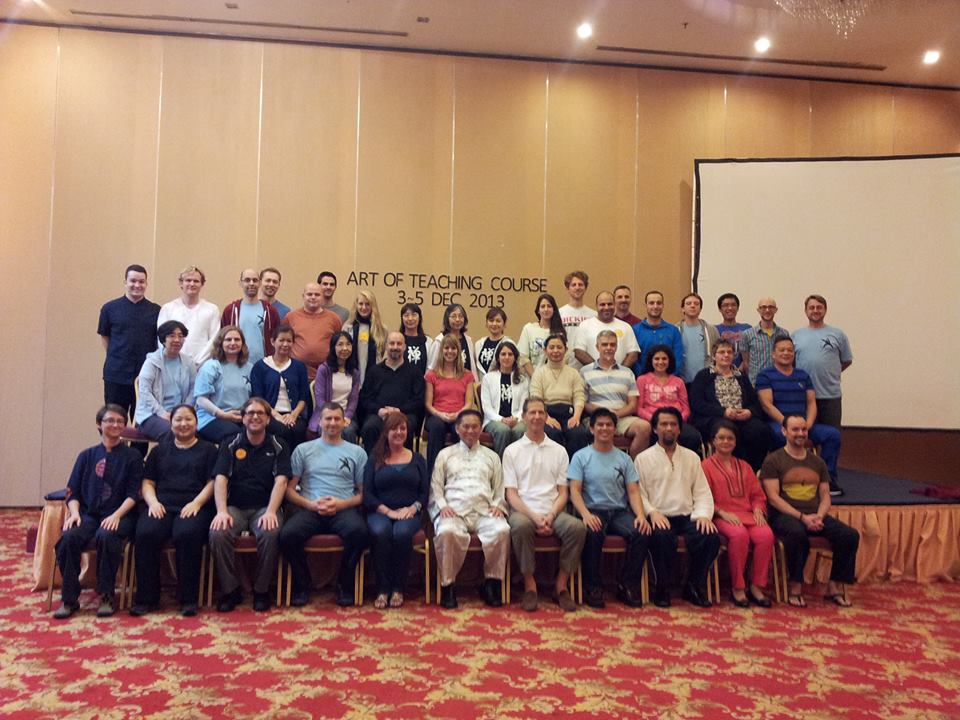
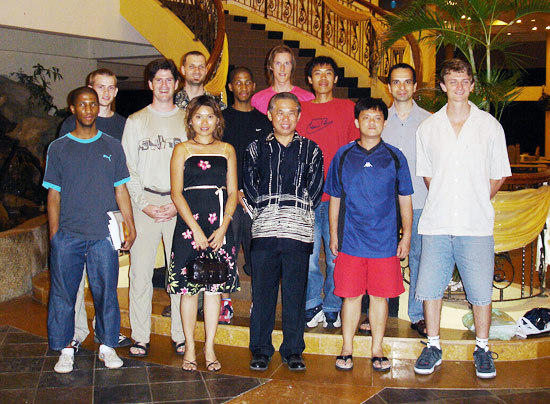
My first Intensive Kung Fu Course with Shaolin Wahnam. I am the person in dark red standing behind my Sifu, Grandmaster Wong Kiew Kit.

Indeed, it is such a joy to be alive!