Creating the right mental frame for the best learning.

An old photograph showing Sifu Wong (in his teens) performing a Hoong Ka kungfu set with his master, Sifu Lai Chin Wah, popularly known as Uncle Righteousness (middle behind in white T-shirt), looking on.
An art is best learnt in its culture. One remarkable difference between the culture of the East and the West is the respect shown to a master. In this connection I have little complaint because my students, from both the East and the West, generally show much respect to me. But I have met many Eastern masters commenting on the lack of respect, sometimes utter disrespect, shown to them.
Often it is because of the Western students’ ignorance of Eastern ways rather than their wilful discourtesy that their Eastern masters of chi kung or kungfu (including taijiquan) regard as disrespect. The following are some simple and helpful points both Eastern and Western students may follow to show the respect deservedly due to their masters.
ADDRESSING THE MASTER CORRECTLY

Sifu Wong (in his 40’s) with his master, Sifu Ho Fatt Nam, the third generation successor from the Shaolin Monastery
First of all you must know how to address your master correctly, something which many Western students are ignorant of. Never, never, never call your master by his name, especially if he comes from a Eastern culture. In some Western societies it may be considered personal and desirable to call your senior or even your boss by his first name, but in chi kung or kungfu culture it is considered extremely rude.
It is worthwhile to remember that your master is not your peer or equal. Your master is at least one, but usually many levels above you, otherwise he cannot and should not be your master. The proper way to address your chi kung or kungfu master is “Sifu”, which is the Cantonese dialect of the Chinese language for “Master”. The Mandarin pronunciation is “Shifu”.
Actually if a great master answers you when you call him “Sifu”, you are, not he is, honoured; it shows he accepts you as a student. I always felt greatly honoured whenever I called my masters Lai Chin Wah and Ho Fatt Nam “Sifu”, because they were two of the greatest masters I had found.
If your master’s surname is Chen, you should call him “Sifu”, or “Master” if you want to sound Western, but strictly speaking not “Sifu Chen” or “Master Chen” for that is the address the public, not his students, would call him. If you call him “Sifu Chen” or “Master Chen” you are distancing yourself from him.
SHOWING PROPRIETY
Besides showing propriety in your address, you should also show propriety in your behaviour. Do not, for example, put your hand around him, pat him on his shoulder, or hug him — leave that to his wife, which following Eastern social etiquette is also only done in private.
When you stand or sit in front of or near him, hold yourself upright. You need not stand at attention like a private in front of his sergeant major, but you should not stand sloppily, with arms akimbo or hands in your pockets. When you sit do not cross your legs with a foot pointing at him, or expose your groins to him even though they are hidden by your pants.
It is only sensible that you should listen when your master speaks, especially if he is explaining some points. Yet, it is not uncommon to find some adult students (male as well as female) lying on the floor, sometimes with their hands folded at the back of their head, their eyes close and their legs open in an inviting position! This shows not so much a disrespect to the master, but an utter lack of good manners on the part of the students.
ENTERING AND LEAVING A CLASS
It is also bad manners to arrive at your class late. In the past in the East, late students would be asked to go home, or to leave permanently if they were late habitually. The logic is simple: the master has something invaluable to offer; if you come late you tacitly show that you do not value his teaching. But if there is a valid reason for your being late, you should first greet him from the door, walk quietly but briskly to him, respectfully wait if he is pre-occupied, then explain your reason and apologize.
On the other hand, you should wait patiently if the master is late — even for hours! If you think this is unfair, you are probably not ripe for great arts. There are stories of great masters who purposely arrived late, not for hours but for days, and then passed on their secrets to the few wise, patient students. Although it seldom happens nowadays, it will reflect a splendid grasp of chi kung and kungfu culture if you and your classmates stop whatever you are doing, stand up respectfully, bow and greet your master as he comes in.
Do not leave your class half-way. But if you have to leave early for some reason, explain that to your master before-hand and politely ask his permission. At the appointed time, ask his permission again, then bow and thank him before leaving. At the end of a class, the students should leave after the master, not before he does. However, if the master stays back for a considerable length of time, such as explaining some points to some students who stay behind to ask him, other students may leave first, after bowing to the master.
In the East, it is customary for the teacher to arrive last and leave first. Interestingly, it is often the reverse in the West. The teacher, Western in culture if not in race, often arrives the earliest, sweeps the floor and prepares cookies and drinks which he will serve during recess to his students, who will joke and laugh. At the end of the class, the teacher will stand at the door, shake the students’ hands and thank them for their attendance. He will then throw away the garbage his students have left behind if he still has energy left, and check that everyone has gone home before he closes the door.
OFFERING A CUP OF TEA
In Eastern culture it is always the students who offer drinks to the teacher. When you offer your master a cup of tea, it is preferable to do so with two hands. In Eastern societies, accepting a cup of tea and drinking it has deeper significance than merely quenching thirst.
In the past, even if someone had done you great wrong, if he or she offered you a cup of tea, usually while kneeling down and then knocking his or her head on the ground, and you, sitting down in front of other witnesses, accepted and drank it, it meant that you accepted his or her apology, were ready to forgive all the wrong, and would not take any action whatsoever in future.
The students should also offer a seat to the master, and the seat chosen is usually the best one available. If the master is not seated, the students should remain standing, unless the master asks them to sit down. If they dine together, the students would wait until the master has made his first move to eat or drink.
DON’T BE INSULTING
When your master is explaining or demonstrating something to you, listen attentively and respectfully. Do not bluntly say you already know what he is teaching, even if you really know. In chi kung and kungfu culture, doing so is not being straight-forward, it is being insulting — you are implying that the master does not know what he is doing.
I recall some occasions when my masters taught me something that I already had learnt quite well. Thanks to my training in Eastern culture, I followed their instructions faithfully although they appeared very simple and below my level then. Only much later did I realize that had I not follow these apparently simple instructions I would not have acquired the foundation necessary for advanced development.
Do not ever make the fatal mistake of telling a master what or how to teach you. This is not only unbecoming, it is also very foolish, for you will be denying yourself the very purpose why you need him. If he is a master, he knows best what and how to help you attain your best results; he is able to see your needs and development in ways far beyond your limited perspective.
FOR THE STUDENTS’ INTEREST
Some westerners may find the above-described master-student relationship odd, just as those accustomed to Eastern culture would find the behaviour of some western students unbelievable. It may be more surprising, especially for those who think they are doing the master a favour by paying him a fee to learn, to know that all these customs of respect for the master are actually for the students’, not the master’s, interest.
Someone who teaches kungfu dance or gentle exercise for a living will probably care more for your fees than your respect, but a master whose art gives you good health, vitality, mental freshness and spiritual joy actually does not care whether you respect him more or your dog. But those students who have experienced the wonderful benefits of genuine kungfu and chi kung will understand that the respect given to the master is not only a sincere token of appreciation to the master for sharing his art, but also constitutes an ideal psychological state for the training to take place.
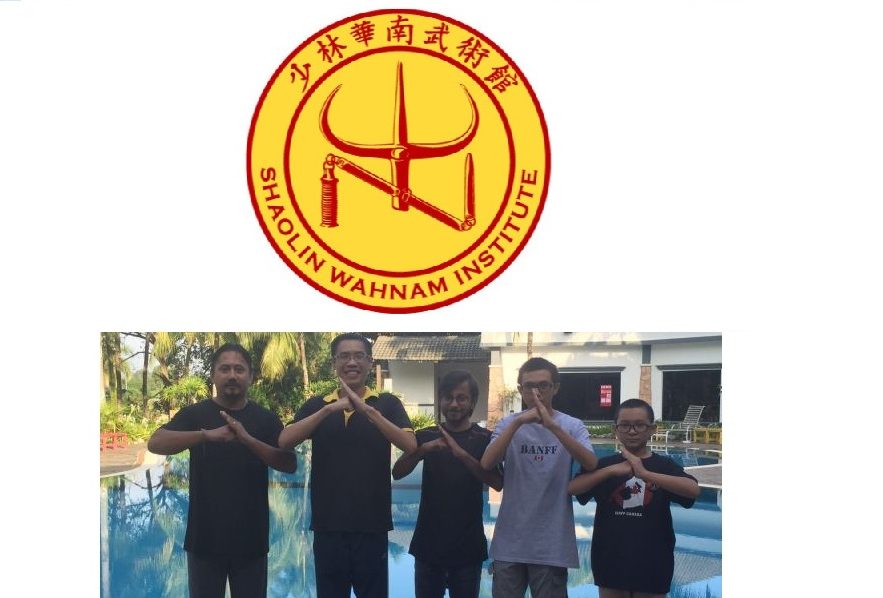


 Shaolin Wahnam Kuala Lumpur